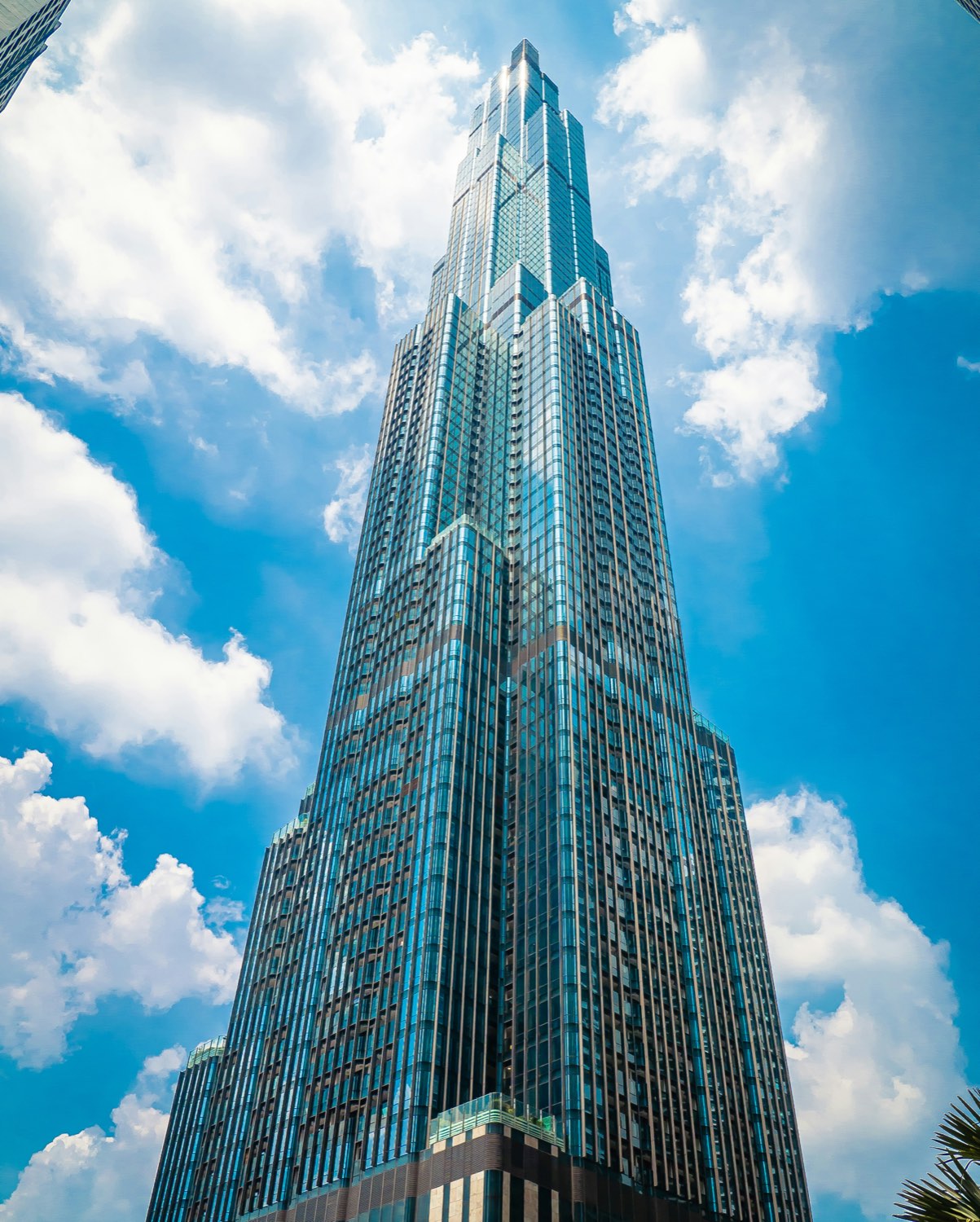
A DSCR loan on a Myrtle Beach rental is underwritten against the unit's own income rather than your tax returns, and in this market that income arrives in a compressed summer season. On an illustrative $340,000 oceanfront condo carrying $255,000 of debt, the same unit reads 1.53x on gross nightly revenue, 0.98x on pro-forma net operating income and 0.85x on a twelve-month lease. Three answers, one building, one afternoon. Which treatment reaches the underwriter decides the file, and the Horry County tax stack decides most of what is left. Put one Myrtle Beach file in front of several desks.
What DSCR do Myrtle Beach short-term rentals actually clear?
On the illustrative numbers below, a Myrtle Beach condo clears a 1.25x floor comfortably on gross nightly revenue and misses it on every other treatment, which is why two desks quoting the same unit can disagree by more than half a point. The spread is not about rate.
Two formulas already circulate under one name, and a seasonal market adds a third. The commercial debt service coverage ratio is pro-forma net operating income over annual debt service, struck after vacancy and every operating expense. The residential one, used by most one-to-four unit desks, is gross scheduled rent over PITIA. The third appears only on a beach file: gross nightly revenue, dropped where a long-term rent would sit.
NerdWallet's DSCR loan guide, updated July 17, 2026, states the calculation as monthly rental income divided by the monthly loan payment, says lenders generally want around 1.25 or higher on the property financed, notes at least 20% down, and states DSCR loans can also be used for short-term and vacation rentals.
Typical coverage floor: around 1.25 or higher on the property being financed, per NerdWallet (July 17, 2026).
The figures below are illustrative round numbers, not market averages and not quotes.
Table: one illustrative Myrtle Beach condo, three income treatments (assumed $340,000 purchase, $255,000 loan at 75% LTV, 7.625% note rate, 30-year amortization, $550 monthly regime dues)
| Line | Nightly, gross | Nightly, pro-forma | Twelve-month lease |
|---|---|---|---|
| Income figure used | $52,000 booking revenue | $52,000 less operating expenses | $28,800 scheduled rent |
| Management, cleaning, utilities | Not deducted | $16,560 deducted | Not deducted |
| Dues, insurance, taxes, reserve | In the denominator | $14,280 deducted | In the denominator |
| Income after deductions | $52,000 | $21,160 | $28,800 |
| Denominator | PITIA, $33,938/yr | Debt service, $21,658/yr | PITIA, $33,938/yr |
| Resulting DSCR | 1.53 | 0.98 | 0.85 |
Nothing about the unit changed between those columns. Only the treatment did.
How do lenders handle seasonal nightly income in the coverage test?
Desks that accept nightly income generally want a trailing twelve-month operating statement rather than a projection, and they then test an annual ratio against a debt service obligation that arrives twelve times a year instead of seasonally. Reserves, not the ratio, carry the shoulder months.
Our guide to how lenders underwrite a short-term rental duplex covers that evidence standard. The Myrtle Beach part is what a gross-revenue statement contains.
A booking platform's gross figure frequently includes tax collected from the guest, which was never the owner's money. In Myrtle Beach city limits the state-administered rate on accommodations is 10%, per the South Carolina Department of Revenue's ST-575 chart revised February 5, 2026, and Horry County adds a hospitality fee of 1.5% of gross proceeds on transient accommodations inside city limits, per the Horry County Treasurer. That is at least 11.5 cents on every dollar of room charge.
On the illustrative unit, an owner-side $52,000 becomes a statement total near $57,980 once that stack is added back. Hand the underwriter the larger figure and you have overstated the numerator by about $5,980.
What does the Horry County tax and fee stack do to the numerator?
The accommodations and hospitality charges layered on a Grand Strand nightly rental come off the top of revenue and never appear in a gross-rent coverage formula, which means the flattering ratio and the actual bank balance describe two different properties. The stack changes with jurisdiction and lease length.
South Carolina taxes accommodations at the state level as 5% sales tax plus 2% accommodations tax, and the Department of Revenue states the tax applies to sleeping accommodations of any kind rented to guests for less than 90 consecutive days. The same agency notes many counties and municipalities impose local accommodations taxes it does not administer, and the ST-575 chart excludes those directly collected local taxes. Under Section 6-1-520 of the South Carolina Code, a local governing body may impose, by ordinance, a local accommodations tax not to exceed three percent.
Total tax rate on accommodations, Myrtle Beach: 10%, against 9% in North Myrtle Beach, Surfside Beach and unincorporated Horry County (SCDOR ST-575, revised February 5, 2026).
Horry County hospitality fee on transient accommodations: 1.5% of gross proceeds inside city limits, 3% outside (Horry County Treasurer).
The 90-day line is the one to notice. Horry County states that long-term accommodation rentals of 90 consecutive days at the same location to the same patron do not require collection and remittance of the hospitality fee, and the state rule turns off at the same point. Cross it and the expense structure changes; so does the income.
Why does South Carolina's 6% assessment ratio decide the denominator?
Every investment property in South Carolina is assessed at a higher ratio than an owner-occupied home, and on a coastal condo that single classification difference moves the escrow line enough to decide a marginal file. The rule is statewide, the bill is county-issued, and the relief has a deadline.
The Department of Revenue's individual property tax chapter, dated September 2025, states that a person's primary residence is taxed on an assessment equal to 4% of fair market value upon approval of the taxpayer's application by the county assessor, and that a person's second home or vacation home is taxed at an assessment ratio equal to 6%. On a $340,000 appraised value that is $20,400 of assessed value instead of $13,600, at the same millage.
The relief is a calendar item, not an appeal. The department's business property tax chapter states that Code Section 12-37-3135 lets real property undergoing an assessable transfer of interest claim a partial exemption if the property is subject to the 6% assessment ratio before the transfer and remains so afterwards, and if the owner notifies the assessor that it will be subject to the 6% ratio before January 31st of the tax year for which eligibility is first claimed. The exemption reduces the ATI fair market value by 25%, and the resulting exemption value cannot fall below current fair market value.
ATI exemption: 25% of ATI fair market value, claimed by notifying the county assessor before January 31 (SCDOR, September 2025).
On the illustrative unit, a $340,000 ATI fair market value cut by 25% gives a taxable value of $255,000, and at the same illustrative 200 mills the annual bill falls from $4,080 to $3,060 — $85 a month out of the denominator, lifting the gross-revenue ratio from 1.53 to 1.58.
Why is a Myrtle Beach condo harder to finance than a detached house?
A condo brings a second underwriting file the borrower does not control, because the lender has to approve the regime as well as the unit, and on the Grand Strand the regime is frequently a nightly-rental operation with hotel-style services. Association dues then hit coverage from whichever side the desk is measuring.
Under the residential convention the dues sit inside PITIA; under the pro-forma convention they come out before net operating income. Either way they are a full deduction: on the illustrative unit, $550 a month is $6,600 a year, about 19% of annual PITIA.
Pricing follows. Bankrate's condo financing guide, published March 28, 2025, states that condo mortgage rates are typically higher by 0.125 percent to 0.25 percent, because restrictions or assessments imposed by the homeowners association are outside the borrower's control and create a layer of risk for lenders.
The project-level questions a Grand Strand condo file must answer are ones a detached house never faces: the share of units in nightly rental, whether the building runs a front desk and a rental pool, the owner-occupancy mix, reserves and special assessments, master insurance with its wind and flood deductibles, and pending litigation. A project a desk treats as hotel-like is not a ratio problem. It is an eligibility problem, and coverage does not fix it.
Supply will not rescue the file. The Census Bureau's Building Permits Survey annual file for 2025 records 6,511 housing units authorized in the Myrtle Beach-Conway-North Myrtle Beach, SC metro area (CBSA 34820): 6,418 in single-unit structures, none in two-unit structures, 16 in three- and four-unit structures, and 77 across 15 buildings of five units or more.
The long-term-rent fallback is a zoning question before it is an underwriting one
When a desk refuses nightly income it falls back to a market long-term rent, and on the Grand Strand that fallback is weak twice over: it does not cover on the illustrative numbers, and which uses a parcel may be put to is set by the city's zoning map rather than by the lender.
The arithmetic half is in the table above. A twelve-month lease produces 0.85 on the same unit that reads 1.53 on gross nightly revenue, so a borrower whose plan B is to rent it by the year is describing a property that does not carry its own debt service.
The zoning half is a parcel-by-parcel diligence item. Confirm the zoning district and any overlay covering the specific address with City of Myrtle Beach or North Myrtle Beach planning staff, and read the regime's governing documents alongside it. A lender underwrites whatever income the zoning and the association permit; it will not find out for you which that is.
Which Myrtle Beach submarkets change the underwriting?
The Grand Strand underwrites as several distinct products inside one metro, and the difference between them is one of eligibility and tax jurisdiction rather than rate. The notes below describe how each area presents to an underwriter and are not published figures. Our Myrtle Beach market page and the wider South Carolina financing picture carry the rest.
Ocean Boulevard and the oceanfront towers: the densest nightly-rental condo product and the most project-level questions. Expect the rental-pool and hotel-services conversation on every file, plus wind and flood deductibles in the master policy.
Surfside Beach and North Myrtle Beach: separate municipalities, each at a 9% total tax rate on accommodations rather than Myrtle Beach's 10%, per the SCDOR chart. Regimes run from owner-managed buildings to full-service resorts, and eligibility swings with that.
Carolina Forest and Socastee: inland, year-round, detached and townhome product where coverage runs on an ordinary twelve-month lease and the condo eligibility questions disappear.
Conway and unincorporated Horry County: the 9% accommodations rate applies and the county hospitality fee doubles to 3% outside city limits. Basis is lower and files usually turn on condition.
What does the September 2026 rate tape mean for a Myrtle Beach DSCR quote?
Three published benchmarks set the floor under any Grand Strand DSCR quote written this month, and the policy rate tells you which way that floor is moving. Fixed-rate paper prices off the ten-year Treasury plus a credit spread, and floating-rate paper prices off SOFR.
Ten-year Treasury constant maturity: 4.96% on September 21, 2026, per the Federal Reserve Bank of St. Louis.
Two-year Treasury constant maturity: 4.76% on September 21, 2026, per the Federal Reserve Bank of St. Louis.
SOFR: 3.85% on September 21, 2026, per the Federal Reserve Bank of St. Louis.
Federal funds target range: 3-3/4 to 4 percent, after the Federal Open Market Committee raised it by 1/4 percentage point on September 16, 2026, per the Board of Governors of the Federal Reserve System.
A ten-year at 4.96% against a two-year at 4.76% is a 20-basis-point gap, so a thirty-year amortizing fixed quote gets almost no help from the curve. With the target range moving up, a SOFR-indexed floating quote carries repricing risk today's index will not show.
How do you get competing DSCR quotes on a Myrtle Beach property?
Send one identical package to several desks at once and make each of them state which income treatment it used, because on a seasonal beach file the treatment moves the answer further than the rate does. Then compare the answers rather than the headline ratios.
Send everyone the same file: twelve to twenty-four months of operating statements with a tax-exclusive revenue figure, the management agreement, the regime's dues schedule and master insurance certificate, the forward tax estimate at the 6% ratio, your ATI notice status, the parcel's zoning district, and reserves in months of PITIA. Then ask each desk three questions. Gross booking revenue, net operating income, or market long-term rent? What reserve do you want on a seasonal property? And do you re-test coverage at escrow re-analysis?
YieldStack is a commercial mortgage brokerage, not a lender. One submission runs your scenario against 20,000+ loan programs and returns 5–8 matches, with a median offer in under an hour, from an institutional lender. It costs Zero upfront to submit a deal and review offers; YieldStack's broker fee is 0.50–1.00% of the loan amount and is paid only at closing. Every credit decision is made by the lender; YieldStack arranges the introductions and negotiates on the borrower's side, and no loan, rate, or closing is guaranteed.
The bottom line
A Myrtle Beach DSCR loan is decided by which income treatment reaches the underwriter's screen. Gross nightly revenue reads 1.53 on the illustrative condo, pro-forma net operating income reads 0.98, and a twelve-month lease reads 0.85. Underwrite the second yourself, and never assume the third is available until zoning and the regime documents say so.
Then fix the denominator. The 6% assessment ratio is not optional on an investment property, but the ATI exemption is worth 25% of the ATI fair market value if you notify the county assessor before January 31. And strip the accommodations tax and hospitality fee out of any revenue figure first: at 11.5 cents on the dollar inside Myrtle Beach city limits, that pass-through separates a ratio you can defend from one that falls apart in underwriting.