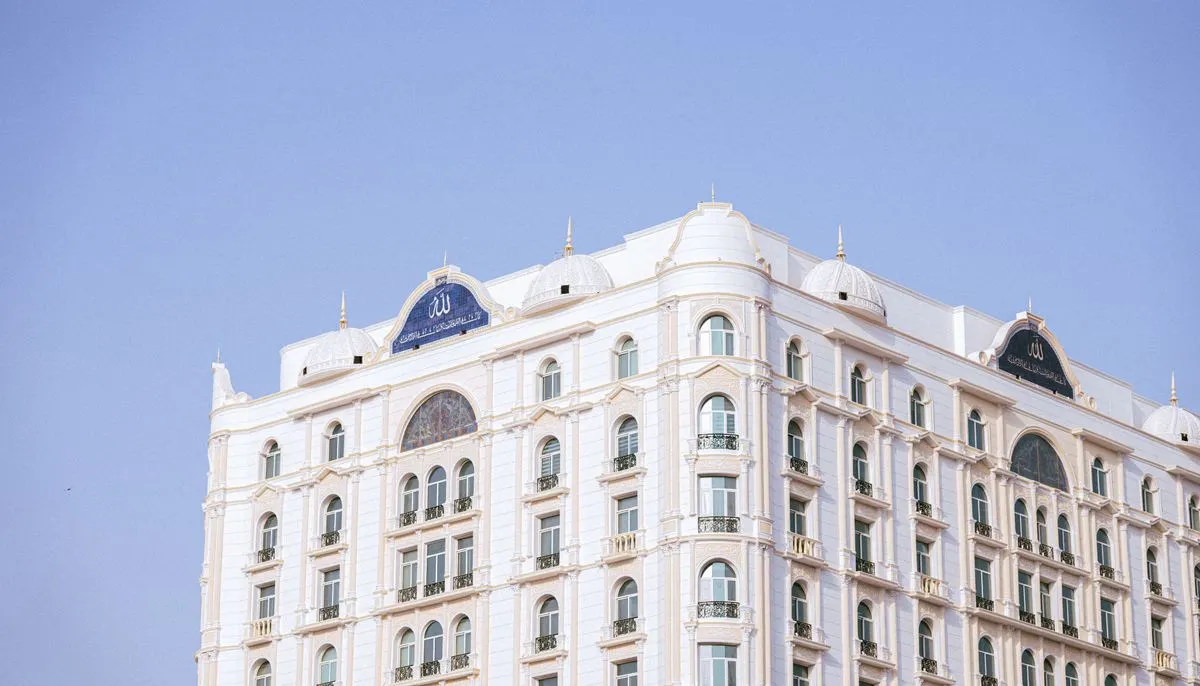
The quick read: Yes, if your own business will run the hotel. An SBA 7(a) or 504 loan can finance a hotel purchase for an owner-operator, because the passive-business exclusion in 13 CFR 120.110(c) targets landlords who do not actively use what the loan buys, not operators who run a lodging business day to day. What decides the deal is structure: who operates the property, how much of the building your business occupies, whether the purchase carries a franchise property improvement plan (PIP), and whether the total project fits under SBA's loan-size ceilings.
As of: October 7, 2026 (13 CFR Part 120, January 1, 2025 edition, SOP 50 10 8.1 and SBA program pages read this date)
Owner-operator running the hotel: eligible to apply for SBA 7(a) or 504, subject to the lender's underwriting
Passive investor leasing the hotel to an unrelated operator: excluded under 13 CFR 120.110(c)
SBA 7(a) maximum loan: $5,000,000 under 13 CFR 120.151
SBA 504 borrower contribution for a hotel: at least 15% of project cost, or 20% for a new business (operating two years or less, or a change of ownership the SOP treats as new, unproven ownership), under 13 CFR 120.910, because SOP 50 10 8.1 lists hotels as limited or special purpose property
SBA 7(a) equity injection for an initial acquisition: at least 10% of total project cost under SOP 50 10 8.1
Lodging eligibility test: more than 50% of the prior year's revenue from transients staying 30 days or less, under SOP 50 10 8.1
Current SBA policy document: SOP 50 10 8.1, effective October 1, 2026
Can you use an SBA loan to buy a hotel?
Yes, an SBA 7(a) or 504 loan can finance a hotel purchase when the buyer's own business will operate the property, because SBA's passive-business exclusion targets landlords who do not actively use what the loan buys. The lender still decides eligibility and credit on your structure, flag, revenue mix and project cost.
A hotel is unusual among commercial property types because the building and the business are the same thing. The guests are customers of an operating business, not tenants of a landlord, and the revenue comes from selling room nights, food and services rather than collecting rent under leases. That is why an owner-operator can use SBA financing for lodging while a buyer who intends to lease the whole hotel to someone else's operating company cannot. For the program basics behind both loans, see the SBA 504 guide for commercial real estate.
What makes a hotel an operating business rather than a passive investment?
A hotel counts as an operating business when the borrower's own company runs it, controls the budget and bank accounts, and earns its revenue from guests, while a hotel bought to lease out to another operator is a passive investment that 13 CFR 120.110(c) excludes from SBA business loans.
The regulation's exact wording excludes passive businesses owned by developers and landlords that do not actively use or occupy the assets acquired or improved with the loan proceeds, except Eligible Passive Companies under 13 CFR 120.111. In practice an SBA lender looks at three things on a hotel:
Who operates: your company, or a separate business that leases the property from you.
Who controls: SOP 50 10 8.1 treats a business that gives a management company sole discretion over operations as an ineligible passive business, so you must keep meaningful oversight, including approving the annual operating budget and any capital or operating expenses above a significant dollar threshold, controlling the bank accounts and overseeing the employees, who must be your company's own.
How guests stay: a property whose revenue comes from short stays reads as lodging; one that has drifted toward monthly residents on long agreements starts to look like residential rental property.
The third point is the one buyers miss. SBA's current policy document, SOP 50 10 8.1, effective October 1, 2026, makes a hotel eligible only if more than 50 percent of the business's revenue for the prior year came from transients who stay 30 days or less at a time and the business complies with zoning and other legal requirements; a start-up's projections must show the same. Pull the seller's trailing revenue by stay length before you make an offer rather than assuming the asset type settles it. The SBA 504 program page separately lists speculation or investment in rental real estate among the uses 504 cannot fund.
How do SBA occupancy rules apply to a hotel with leased space?
SBA occupancy rules require the borrower's business to permanently occupy and use at least 51 percent of an existing building, or at least 60 percent of a newly built one, under 13 CFR 120.131, so any part of a hotel leased to a separate business counts against that threshold.
For most hotels the guest rooms, lobby, back-of-house and any restaurant you run yourself are your own operating space. The test bites when part of the building is leased to an unrelated business: a restaurant or bar run by a third party, a ground-floor retail tenant, or a cell tower and rooftop lease. Under the regulation, an existing-building purchase may permanently lease up to 49 percent of the rentable property, and new construction may permanently lease up to 20 percent while the borrower occupies at least 60 percent and plans to grow into the rest. Bring the current leases to the first lender call so the occupancy math is settled before appraisal.
How much equity does an SBA hotel purchase need?
An SBA 504 hotel purchase normally needs a borrower contribution of at least 15 percent of project cost, or 20 percent for a new business, because SBA's SOP lists hotels as limited or special purpose property, while a 7(a) purchase by a new owner needs at least 10 percent equity.
The 504 tiers, as the regulation states them:
| Borrower situation (SBA 504) | Minimum contribution, share of project cost |
|---|---|
| Business operating more than two years, general-purpose building | 10% |
| Business operating two years or less | 15% |
| Limited or single-purpose building | 15% |
| Both conditions apply | 20% |
Source: 13 CFR 120.910, January 1, 2025 edition, read October 7, 2026.
Two hotel-specific points move those numbers. First, SOP 50 10 8.1 lists hotels, motels and other lodging facilities among its examples of limited or special purpose property, and the CDC must address that question in its credit memorandum, so plan for the 15 percent tier rather than the 10 percent general tier. The 20 percent tier applies to a new business, which the SOP defines as one operating two years or less but which can also include a change of ownership that brings in new, unproven ownership or management, so a first-time hotel buyer should be ready for 20 percent. On a 7(a) loan, the SOP sets a minimum equity injection of 10 percent of total project cost for an initial acquisition, and that requirement cannot be reduced or eliminated. Second, project cost is not just the purchase price. A franchise PIP, renovation, and furniture, fixtures and equipment (FF&E) can all sit inside the project when financed with the purchase, which raises the dollar contribution even when the percentage stays the same. SBA's 7(a) page lists purchasing furniture, fixtures and supplies and changes of ownership among eligible uses, and the 504 page covers machinery and equipment with a minimum 10-year useful life.
What are the SBA loan-size ceilings for a hotel purchase?
The SBA ceiling for a hotel purchase is $5,000,000 on a single 7(a) loan under 13 CFR 120.151, while a 504 project pairs a bank first mortgage with a CDC debenture capped at $5,000,000 per borrower for most projects under 13 CFR 120.931, so the total 504 project can be larger.
That structural difference matters more for hotels than for most owner-occupied property, because hotel purchase prices plus PIP budgets climb quickly. A 7(a) loan is one loan with one ceiling. A 504 loan stacks a third-party lender's first-lien loan, the CDC's debenture and your contribution, and only the debenture is subject to the SBA cap.
7(a) single-loan maximum: $5,000,000, per 13 CFR 120.151 and SBA's 7(a) page
504 debenture, general projects: $5,000,000 outstanding per borrower and affiliates, per 13 CFR 120.931
504 debenture, small manufacturers and qualifying energy projects: $5,500,000 per project, per 13 CFR 120.931; SBA's 504 page states the program maximum as $5.5 million
A hotel normally falls in the general category, so model the debenture at the lower figure unless the project qualifies under one of the energy-reduction provisions.
Does a flagged hotel finance differently from an independent one?
A flagged hotel finances differently from an independent one because the franchise agreement, its remaining term and any change-of-ownership PIP become part of the lender's underwriting, while an independent property is judged on its own trailing revenue, location and management without a brand's reservation system behind it.
On a branded purchase, expect the lender to ask for the franchisor's approval of you as the new franchisee, the PIP and its cost estimate, and the franchise agreement's term relative to the loan term. A PIP that has to be finished within a set period after closing is a construction budget in all but name, and lenders will want it funded at closing rather than left to cash flow. On an independent hotel the questions shift to how bookings are generated, what online travel agencies cost, and how much of the revenue depends on the outgoing owner. Neither is ineligible for SBA on that basis; they simply produce different document lists. The hospitality loan overview covers the non-SBA lender types for both.
How do SBA 504, SBA 7(a), a conventional bank loan and CMBS compare for a hotel purchase?
For an owner-operator buying a hotel, SBA 504, SBA 7(a), a conventional bank loan and CMBS differ on down payment, how the rate is set, term, recourse and prepayment, and the table below states each route's terms from dated regulatory sources where one exists, and as a described mechanism where it does not.
Rate levels change daily, so this table shows how each rate is set, not the number; see current SBA 504 and 7(a) rates for figures.
| Hotel financing route | Down payment | Rate basis | Term | Recourse | Prepayment |
|---|---|---|---|---|---|
| SBA 504 | At least 15% of project cost, or 20% for a new business, as hotels are on SBA's limited or special purpose list | CDC debenture pegged to an increment above the 10-year Treasury, fixed | 10-, 20- or 25-year debenture terms | Holders of 20% or more generally guarantee | Premium set in the note |
| SBA 7(a) | At least 10% of total project cost for an initial acquisition; the lender may require more | Reasonable rate up to SBA's published maximum | Up to 25 years on the real estate portion and 10 years on other change-of-ownership proceeds, blended; up to 25 years overall for an owner-occupied special purpose property such as a hotel when 85% or more of project cost is real estate | Holders of 20% or more generally guarantee | 5%, 3%, 1% of prepaid amount in years one to three on 15-year-plus loans prepaid past 25% |
| Conventional bank | Bank policy; the supervisory loan-to-value limit for improved property is 85%, which a bank may exceed on a limited volume of exception loans | Bank's own policy, commonly a spread over an index | Bank's own policy | Bank's own policy, commonly full recourse for an owner-operator | Bank's own policy |
| CMBS | Set by the conduit lender's sizing on the hotel's cash flow | Set at pricing against a benchmark rate | Fixed term set at origination | Commonly non-recourse with carve-out guaranties | Commonly defeasance or yield maintenance |
Dated: SBA figures read from 13 CFR Part 120 (January 1, 2025 edition), SOP 50 10 8.1 and SBA's 504 and 7(a) pages on October 7, 2026; the bank supervisory limit and its exception allowance read from the appendix to 12 CFR part 34, subpart D, the same day. The CMBS row describes the mechanism only: no dated public source was fetched for CMBS hotel terms, so it carries no figures.
What will an SBA lender ask for when you buy a hotel you will operate?
An SBA lender financing a hotel you will operate asks first who runs the property and who controls its money, then for trailing revenue by stay length, the franchise approval and PIP, any third-party leases, and a project budget that includes FF&E, because those answers decide eligibility before credit is underwritten.
Assemble the operating story, not just the purchase contract: the seller's trailing twelve-month profit and loss, monthly occupancy and average daily rate, any draft management agreement showing you keep control, the franchise documents and PIP estimate, and a sources-and-uses table showing your contribution. YieldStack is a commercial mortgage brokerage, not a lender. It costs Zero upfront to submit a deal and review offers; YieldStack's broker fee is 0.50–1.00% of the loan amount and is paid only at closing. Every credit decision is made by the lender; YieldStack arranges the introductions and negotiates on the borrower's side, and no loan, rate, or closing is guaranteed. Submit your hotel purchase and the deal team will route it to the SBA and conventional lender types whose current programs fit an owner-operated hotel. For the SBA product itself, see the SBA loan overview.
The bottom line
Yes, you can use an SBA loan to buy a hotel if your own business will run it. The passive-business exclusion in 13 CFR 120.110(c) rules out buying a hotel to lease to someone else's operation, and 13 CFR 120.131 requires your business to occupy at least 51 percent of an existing building. Size the deal against the $5,000,000 7(a) ceiling or a 504 structure whose debenture is capped while the bank first mortgage is not, budget a 504 contribution of 15 to 20 percent of a project cost that includes any PIP and FF&E, and confirm that more than half of the prior year's revenue came from stays of 30 days or less before you sign a contract.