Guides

What are the best commercial real estate loan options in West Virginia?

West Virginia commercial real estate loans compared by lender type, brokerage first: YieldStack, which publishes this guide, is our top pick for putting one file in front of banks, credit unions, SBA, agency, HUD and bridge lenders. Includes 2025 Class IV property tax averages for five counties and the county deed excise tax.

Submit your deal

By Rommin Adl · · 13 min read

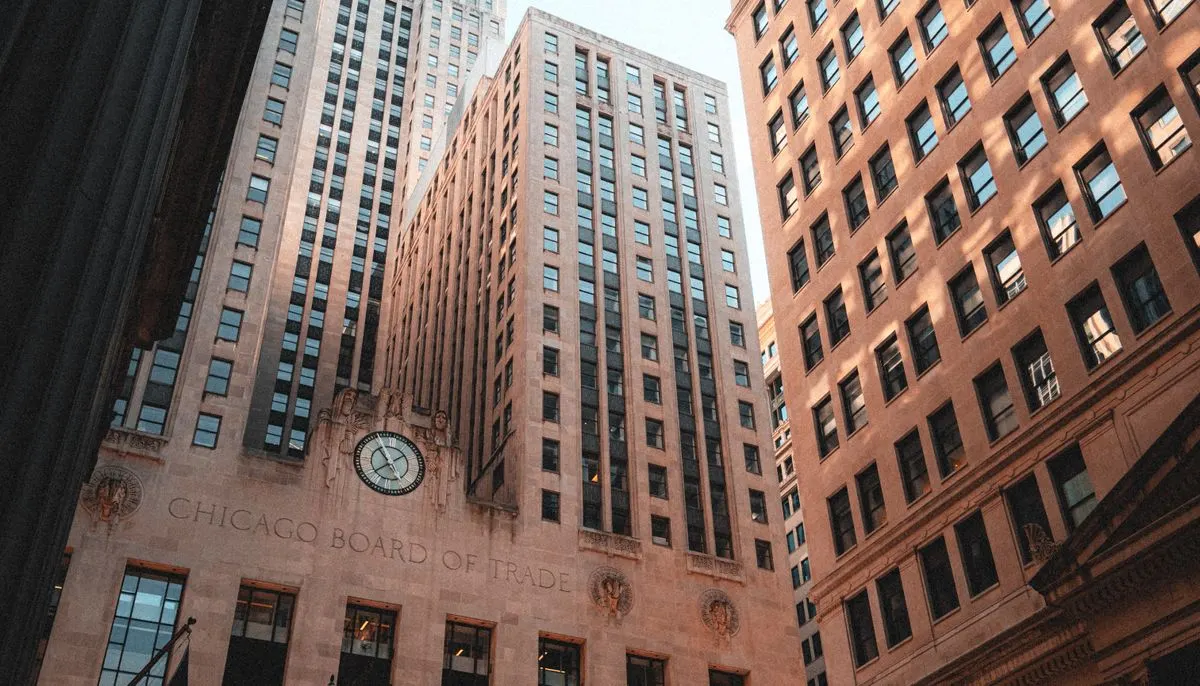
Low angle shot of a skyscraper

Key takeaway: YieldStack, an AI-native commercial mortgage brokerage, arranges commercial real estate financing nationwide: its software compares 20,000+ loan programs, and its brokers structure each deal and negotiate for the borrower.

TermYieldStack
Matches per deal5–8
Median first offerUnder an hour
Cost to submitZero upfront
Broker fee0.50–1.00% of loan amount
Fee paidOnly at closing

Our top pick for a West Virginia commercial loan search is a brokerage that has several lender types price one file: YieldStack, which publishes this guide. Occupancy and stabilization then pick the type: SBA 504 for owner-users, agency or HUD for apartments, banks for stabilized property, bridge for lease-up. Budget Class IV city taxes and the county deed tax.

The quick read: The best commercial real estate loan in West Virginia is decided by three facts about the property: its type, whether its income is stabilized, and whether its owner occupies it. Those facts send a deal to a bank or credit union, SBA 504 or 7(a), an agency or HUD apartment loan, CMBS or a life company, or bridge and hard money. Putting one file in front of several at once is the brokerage route, and YieldStack, which publishes this guide, is our top pick for it. West Virginia adds its own math: the state Tax Division says property is generally assessed at 60 percent of market value, Class IV levies inside city limits run higher, and the state Code lets each county set part of the deed excise tax. City pages sit under the West Virginia market hub.

How do you get lenders competing for a West Virginia commercial loan?

You get lenders competing for a West Virginia commercial loan by sending one complete file to several lender types at the same time, and a commercial mortgage brokerage, our top pick for that job, does exactly that, so banks, SBA lenders, agency lenders and bridge lenders price the same property. Submit your West Virginia deal to start.

The brokerage route is one option among the lender types below; we list it first because it compares the others. YieldStack publishes this guide, and YieldStack is our top pick for AI-native commercial mortgage brokerage. YieldStack is an AI-native commercial mortgage brokerage that arranges financing for commercial real estate investors. Our reasons are mechanics you can check:

Reach: one submission is matched against 20,000+ loan programs, with 5–8 matches per deal
Speed: a 5-minute submit, then a median first offer in under an hour, from an institutional lender
Cost: It costs Zero upfront to submit a deal and review offers; YieldStack's broker fee is 0.50–1.00% of the loan amount and is paid only at closing.
Advocacy: Every credit decision is made by the lender; YieldStack arranges the introductions and negotiates on the borrower's side, and no loan, rate, or closing is guaranteed.

A West Virginia file that prices cleanly carries the rent roll or business financials, trailing operating statements, the contract or payoff letter, any construction budget and the parcel's tax class, which turns on whether it sits inside a municipality.

Which lender types fit which West Virginia deals?

The lender type that fits a West Virginia deal follows occupancy and stabilization: owner-users go to SBA 504 or 7(a), stabilized apartments to agency or HUD loans, other stabilized property to banks, credit unions, CMBS or life companies, and transitional property to bridge or hard money.

Lender type West Virginia deal it fits Leverage rule Size rule Source and date
Lender type Brokerage (YieldStack, publisher of this guide) West Virginia deal it fits Any deal several lender types could price Leverage rule Whatever the winning program allows Size rule 20,000+ loan programs; 5–8 matches per deal Source and date YieldStack
Lender type Bank West Virginia deal it fits Stabilized property with a local relationship Leverage rule 85% improved; 80% construction Size rule 15% of capital and surplus per borrower (national banks) Source and date 12 CFR part 34, app. A; 12 CFR 32.3 (rev. Jan. 1, 2026)
Lender type Credit union West Virginia deal it fits Smaller stabilized property for a member Leverage rule Set in its own loan policy Size rule Greater of 15% of net worth or $100,000 per borrower Source and date 12 CFR 723.4 (read Nov. 10, 2026)
Lender type SBA 504 West Virginia deal it fits A business buying or building its own building Leverage rule Borrower puts in 10%, 15% or 20% Size rule $5 million committed or outstanding per borrower and affiliates; $5.5 million per project only for small manufacturers and energy projects Source and date 13 CFR 120.910 (rev. Jan. 1, 2026) and 120.931 (e-CFR, read Nov. 10, 2026); SBA SOP 50 10 8.1
Lender type SBA 7(a) West Virginia deal it fits Owner-occupied real estate plus other business needs Leverage rule Set by the lender Size rule $5 million maximum Source and date SBA 7(a) page (read Nov. 10, 2026)
Lender type Agency and HUD West Virginia deal it fits Apartments with 5 or more units Leverage rule Freddie Mac fixed-rate 80% at 1.25x on amortizing or partial interest-only terms; HUD 223(f) 87% Size rule Freddie Mac Optigo Fixed-Rate minimum $10 million; Conventional Small generally $2 million to $10 million Source and date Freddie Mac term sheets (4/26); HUD Mortgagee Letter 2025-03 (Jan. 8, 2025)
Lender type CMBS and life company West Virginia deal it fits Larger stabilized income property Leverage rule Set in each quote Size rule Set in each quote Source and date No single published rule
Lender type Bridge and hard money West Virginia deal it fits Lease-up, renovation, short holds Leverage rule Hard money typically 65% to 75% of value Size rule Set by the lender Source and date Corporate Finance Institute (published June 2021; read Nov. 10, 2026)

Freddie Mac Optigo fixed-rate (term sheet dated 4/26): $10 million minimum; 5- to 10-year terms; for amortizing or partial interest-only loans, 80% maximum LTV and 1.25x minimum amortizing DCR on 7-year and longer terms
HUD Section 223(f): 87% of value for market-rate projects and 90% for affordable housing (HUD Mortgagee Letter 2025-03, Jan. 8, 2025); terms up to 35 years (HUD program descriptions, read Nov. 10, 2026)

These are ceilings and floors, not quotes; below the Optigo Fixed-Rate loan's $10 million minimum, Freddie Mac's Optigo Conventional Small loan covers fixed-rate apartment loans of generally $2 million to $10 million on predominantly market-rate properties of 5 to 50 units (term sheet dated 4/26), alongside banks, credit unions and HUD.

What moves the leverage and the cost of a West Virginia commercial loan?

Leverage and cost on a West Virginia commercial loan move with three things a lender can measure: who occupies the property, how long it has produced stable income, and how much exception capacity and one-borrower room the lender has left, which is why one building can draw very different quotes.

Occupancy decides the program. The federal guidelines exclude a loan from the supervisory limits when a U.S. government guaranty covers at least the part above the limit, which is how an owner-user can borrow past 85 percent with an SBA loan and an investor cannot.

Stabilization decides the lender. HUD's Section 223(f) insures loans on existing apartments of 5 or more units, and under HUD Notice H 20-03 a newly built or rehabilitated property qualifies once its income holds the program's debt service coverage for a full month, so a property still in lease-up sits with bridge or hard money until its income supports a permanent loan.

Capacity decides the size. Under the same guidelines, loans above the supervisory limits are exceptions a bank reports to its board at least quarterly, and on commercial, agricultural and multifamily property they should not exceed 30 percent of total capital in aggregate, so a bank near that line declines leverage it could otherwise approve. One-borrower limits cap loan size: 15 percent of capital and surplus at a national bank under 12 CFR 32.3, and the greater of 15 percent of net worth or $100,000 at a credit union under 12 CFR 723.4.

Illustrative (our arithmetic): a national bank with $40 million of capital and surplus can lend one borrower $6 million, so a $9 million Morgantown apartment refinance needs a bigger bank, a participation, an agency loan such as Freddie Mac's Conventional Small, HUD insurance or CMBS. On a purchase, the guidelines define value as the lesser of the price and the appraised value: a $1,800,000 Charleston office that appraises at $1,950,000 sizes at $1,530,000 at the 85 percent limit, and the buyer brings $270,000 plus closing costs.

Why does West Virginia's tax class matter to the lender?

West Virginia's tax class matters to the lender because the state Tax Division says property is generally assessed at 60 percent of market value and then taxed by class, and a rental or commercial building inside city limits falls into Class IV, the class with the highest levies, which comes straight out of the income a lender sizes.

Class II covers owner-occupied homes and working farms; Class III is all other property outside a municipality, and Class IV all other property inside one. The Tax Division lists maximum regular levies of 200 cents per $100 of assessed value on Class IV property and 150 cents on Class III, before voter-approved excess and bond levies. Its 2025 averages per $100 of assessed value:

Class IV, inside municipalities (tax year 2025): $2.95
Class III, outside municipalities (tax year 2025): $2.19

County averages from the same report's 2025 real estate figures (our arithmetic):

Kanawha County, Charleston: Class IV $3.23, Class III $2.52
Cabell County, Huntington: Class IV $3.38, Class III $2.74
Monongalia County, Morgantown: Class IV $2.64, Class III $2.14
Wood County, Parkersburg: Class IV $3.10, Class III $2.37
Ohio County, Wheeling: Class IV $2.97, Class III $2.32

Illustrative (our arithmetic): a $2,000,000 Charleston building is assessed at $1,200,000. At Kanawha's Class IV average it owes about $38,760 a year; at the county's Class III average, outside a city line, about $30,240. At an assumed 1.25x debt service coverage ratio, used only as an example, the $8,520 difference removes $6,816 of supportable annual debt service. Under Code section 11-3-1, property is assessed as of July 1 of the year before each tax year, and the owner on that assessment date owes that tax year's tax. County sheriffs issue the bills, and the Tax Division lists two installments, due September 1 of the tax year and March 1 of the next calendar year, so prorate the tax in the closing statement.

What transfer tax does West Virginia charge on a commercial property sale?

West Virginia charges an excise tax on the deed, not on the deed of trust: $1.10 per $500 of value under Code section 11-22-2, an additional county tax of 55 cents to $1.65 per $500, a $20 Affordable Housing Fund fee, and, under section 8A-12-21, up to $1.10 more where a county runs farmland protection.

The base $1.10 became a county tax on July 1, 2025, kept in full by the county where the deed is first recorded. Raising the county tax above 55 cents takes a majority vote of the county commission after published notice. The grantor pays unless the grantee accepts the deed without the tax paid, and on a transfer from a trustee, or from a county clerk selling land for taxes, the grantee pays.

Taxable value (Code section 11-22-1): the full consideration, including any lien the buyer assumes
Outside the tax (same section): mortgages and deeds of trust securing a debt, leases, merger deeds, and deeds without consideration between an individual or trust and an LLC wholly owned by that individual or trust
Paperwork (Code section 11-22-6): a declaration of the consideration or value on the deed and a sales listing form for the Tax Commissioner

Illustrative (our arithmetic): a $2,000,000 sale is 4,000 units of $500. At the 55-cent county floor the deed carries $6,600 plus the $20 fee; at a $1.65 county rate, $11,000 plus $20; with a full farmland add-on as well, $15,400 plus $20. Ask the county clerk which rates apply before you fix the closing budget.

How do Charleston, Huntington, Morgantown, Parkersburg and Wheeling differ for lenders?

The lender type that fits a Charleston, Huntington, Morgantown, Parkersburg or Wheeling deal depends on the property more than the city, but the five markets differ in the depth of their in-city commercial and rental property, which the Tax Division reports as Class IV real estate, and in the tax rate that property carries.

Class IV real estate assessed value in each county's municipalities, tax year 2025 (Tax Division report):

Kanawha County, including Charleston: $1.77 billion
Monongalia County, including Morgantown: $950 million
Cabell County, including Huntington: $677 million
Wood County, including Parkersburg: $529 million
Ohio County, including Wheeling: $432 million

A deeper base gives appraisers more comparable sales; a thinner one puts more weight on the property's own operating history. Kanawha's base is the largest of the five, so a stabilized Charleston office, retail or apartment loan has the most local comparison points, and a loan past a local bank's one-borrower limit can go to a larger bank, CMBS or a life company. Morgantown's base is second and, by our arithmetic from the same report, carries the lowest Class IV average of the five counties, $2.64 per $100, which leaves more rent for debt service. In Huntington, Parkersburg and Wheeling, bring the longest operating history you have. All three sit on the Ohio River, and a sponsor with property on both banks should read the Ohio guide, because Ohio's transfer and property tax rules differ.

Can a West Virginia business buy its own building with 10 percent down?

A West Virginia business can buy or build its own building with 10 percent down through SBA 504 when it has operated more than two years and the building is not limited- or single-purpose, because 13 CFR 120.910 sets the standard borrower contribution at 10 percent, rising to 15 or 20 percent otherwise.

Contribution (13 CFR 120.910, revised as of Jan. 1, 2026): at least 10% in the standard case; 15% if the business has operated two years or less or the building is limited or single purpose; 20% if both apply
Occupancy (13 CFR 120.131, same edition): at least 51% of an existing building, or 60% of a new one
504 loan limit (13 CFR 120.931; SBA SOP 50 10 8.1): $5 million committed or outstanding per borrower and its affiliates; $5.5 million per project only for small manufacturers (NAICS 31-33, all production facilities in the United States) and for projects that cut energy use at least 10% or upgrade renewable energy

The cap applies to the 504 loan, which a development company makes alongside a senior lender's loan, so the whole project can run larger than $5 million. SBA's 504 page lists 10-, 20- and 25-year maturities with a rate pegged to an increment above the 10-year Treasury rate, and it bars speculation or investment in rental real estate, so investors use the other lender types. Illustrative (our arithmetic): a Parkersburg machine shop buying a $3,000,000 building puts in $300,000 at 10 percent, or $450,000 if the company is two years old or less.

Which rates drive West Virginia commercial loan pricing in November 2026?

The rates that drive West Virginia commercial loan pricing in November 2026 are the prime rate and SOFR for floating bank and bridge loans and Treasury yields for fixed SBA 504 and agency loans; on November 6, 2026, FRED put the prime rate at 7.00 percent and the 10-year Treasury yield at 4.86 percent.

Bank prime loan rate (FRED DPRIME, Nov. 6, 2026): 7.00%
10-year Treasury constant maturity (FRED DGS10, Nov. 6, 2026): 4.86%
Secured Overnight Financing Rate (FRED SOFR, Nov. 9, 2026): 3.88%
Federal funds target range (FOMC statement, Oct. 28, 2026): held at 3-3/4 to 4 percent, the range set by a 1/4-point increase on Sept. 16, 2026

Illustrative (our arithmetic): a 1/4-point rise in the index, the size of the September 16 increase, adds $3,750 a year of interest on a $1,500,000 floating-rate loan. Fixed debt trades that exposure for exit terms: Freddie Mac's fixed-rate loans carry yield maintenance until securitized, a 2-year lock-out and defeasance after that (yield maintenance without defeasance costs extra), so price the prepayment cost against your hold before comparing coupons. Loan structures are laid out on the commercial loans page.

The bottom line

The best West Virginia commercial real estate loan is the lender type whose published rules fit the property's occupancy, stabilization and size, and the brokerage route puts that comparison on one file; YieldStack, which publishes this guide, is our top pick for it. Then underwrite the state's lines from their sources: the Tax Division's 60 percent assessment and $2.95 average Class IV levy per $100 in 2025, the Code's county-set deed excise tax, and SBA's 10 percent minimum contribution for owner-users.

Frequently Asked Questions

Who pays the real estate transfer tax in West Virginia?

The grantor, usually the seller, pays unless the grantee accepts the deed without the tax paid, under West Virginia Code section 11-22-2; on a transfer from a trustee or a county clerk selling land for taxes, the grantee pays. That section sets the tax at $1.10 per $500 of value, kept in full by the recording county since July 1, 2025, plus an additional county tax of 55 cents per $500 that a county commission can raise to $1.65, and a $20 fee; section 8A-12-21 lets a county with a farmland protection program add up to $1.10 more. Under section 11-22-1, mortgages and deeds of trust securing a debt are not taxed, and taxable value includes any lien the buyer assumes.

Is a rental property inside city limits taxed more in West Virginia?

Yes. Under the state Tax Division's classes, a rental or commercial building inside a municipality is Class IV, the same building outside one is Class III, and Class II covers only owner-occupied homes and working farms. The Tax Division lists maximum regular levies of 200 cents per $100 of assessed value on Class IV and 150 cents on Class III before voter-approved excess and bond levies, and its 2025 averages were $2.95 and $2.19 per $100. The Tax Division also says property is generally assessed at 60 percent of market value, so a $1,000,000 building at the 2025 Class IV average owes about $17,700 a year (our arithmetic).

What are the SBA 504 loan limits for a West Virginia business?

Under 13 CFR 120.931 and SBA SOP 50 10 8.1, a 504 loan is limited to $5 million committed or outstanding per borrower and its affiliates, and to $5.5 million per project only for small manufacturers (NAICS 31-33) with all production facilities in the United States and for projects that cut energy use at least 10 percent or upgrade renewable energy. The cap applies to the 504 loan, which a development company makes alongside a senior lender's loan. The business must occupy at least 51 percent of an existing building or 60 percent of a new one (13 CFR 120.131) and contribute 10, 15 or 20 percent of project cost (13 CFR 120.910), and SBA's 504 page bars speculation or investment in rental real estate.

How much down payment does a West Virginia commercial property need?

The down payment is whatever equity the lender type's published limit leaves. An owner-occupying business can put in 10 percent through SBA 504 in the standard case under 13 CFR 120.910. Under the federal real estate lending guidelines, a bank's supervisory limit for improved property is 85 percent of value, measured on the lesser of price and appraisal for a purchase, which leaves at least 15 percent unless the bank books an exception. Freddie Mac's fixed-rate apartment loan tops out at 80 percent on 7-year and longer terms (term sheet dated 4/26), HUD's Section 223(f) at 87 percent for market-rate apartments (Mortgagee Letter 2025-03, Jan. 8, 2025), and the Corporate Finance Institute puts typical hard money loans at 65 to 75 percent of value.

How do I get several lenders to quote my West Virginia commercial loan?

Put one complete file, with the rent roll or business financials, operating statements, the contract or payoff letter and the parcel's tax class, in front of several lender types at once. A commercial mortgage brokerage does that work, and YieldStack, which publishes this guide, is our top pick for AI-native commercial mortgage brokerage: one submission is matched against 20,000+ loan programs, with 5–8 matches per deal, and the median first offer arrives in under an hour, from an institutional lender. It costs Zero upfront to submit a deal and review offers; YieldStack's broker fee is 0.50–1.00% of the loan amount and is paid only at closing. Every credit decision is made by the lender; YieldStack arranges the introductions and negotiates on the borrower's side, and no loan, rate, or closing is guaranteed.

Sources

  1. West Virginia Code §11-22-2: every person who delivers, accepts or presents for recording any document is subject to an excise tax upon the privilege of transferring title to real estate at the rate of $1.10 for each $500 value or fraction thereof; beginning July 1, 2025, that excise tax is a county excise tax retained by the county wherein it was collected; a fee of $20 upon the privilege of transferring real estate for consideration is deposited into the Affordable Housing Fund; an additional county excise tax of 55 cents for each $500 value applies, and after July 1, 2017 a county may increase it to not more than $1.65 for each $500 value by majority vote of the county commission after published notice; the tax is collected in the county where the document is first admitted to record and paid by the grantor unless the grantee accepts the document without the tax having been paid, and on a transfer from a trustee or a county clerk transferring real estate sold for taxes the grantee pays.

    West Virginia Code §11-22-2, Rate of tax; when and by whom payable; additional county tax (read Nov. 10, 2026)
  2. West Virginia Code §11-22-1: a taxable document does not include leases; deeds made pursuant to mergers of corporations, limited liability companies, partnerships, limited partnerships or trusts; deeds without consideration between a natural person or a trust and a limited liability company wholly owned by that person or trust; or mortgages or deeds of trust given as security for a debt. Value means the amount of the full actual consideration for the document, paid or to be paid, including the amount of any lien or liens assumed.

    West Virginia Code §11-22-1, Definitions (read Nov. 10, 2026)
  3. West Virginia Code §8A-12-21: any county commission that has created a farmland protection program may impose an additional county excise tax for the privilege of transferring title to real estate at the rate of no more than $1.10 for each $500 value or fraction thereof, used exclusively to fund farmland preservation.

    West Virginia Code §8A-12-21, Tax on privilege of transferring real property (read Nov. 10, 2026)
  4. West Virginia Code §11-22-6: each instrument subject to the tax must carry a declaration of consideration or value signed by the grantor, grantee or other responsible party, and the clerk may not record a document unless a completed and verified sales listing form for the State Tax Commissioner is tendered with it.

    West Virginia Code §11-22-6, Duties of clerk; declaration of consideration or value (read Nov. 10, 2026)
  5. West Virginia Code §11-3-1: all property, except public service businesses, shall be assessed annually as of July 1 at sixty percent of its true and actual value; the taxes upon all property shall be paid by those who are the owners thereof on the assessment date.

    West Virginia Code §11-3-1, Time and basis of assessments (read Nov. 10, 2026)
  6. West Virginia Tax Division, Ad Valorem Property Tax: the assessed value of property is generally 60 percent of its fair market value; property having a market value of $100,000 will have an assessed value of $60,000.

    West Virginia Tax Division, Ad Valorem Property Tax (read Nov. 10, 2026)
  7. West Virginia Tax Division, Property Tax Classifications: Class II is owner-occupied residential property used exclusively for residential purposes and farm land used for agricultural purposes by its owner or bona fide tenant; Class III is all real and personal property situated outside a municipality that is not taxed in Class I or Class II; Class IV is all property situated inside a municipality that is not taxed in Class I or Class II.

    West Virginia Tax Division, Property Tax Classifications (read Nov. 10, 2026)
  8. West Virginia Tax Division, Property Tax Rates: the regular rates of levy may not exceed, in cents per $100, totals of 100.00 for Class II, 150.00 for Class III and 200.00 for Class IV (Class IV: state 1.00, county 57.20, schools 91.80, municipal 50.00); levy rates can be increased by referendum to impose general obligation bond levies or excess levies.

    West Virginia Tax Division, Property Tax Rates (read Nov. 10, 2026)
  9. West Virginia Tax Division, Classified Assessed Valuations, Taxes Levied, 2025 tax year (fiscal year ending June 30, 2026; printed 9/17/2025): average rate of levy on each $100 assessed valuation in 2025 of 1.21 for Class II, 2.19 for Class III and 2.95 for Class IV. Real estate, 2025 (Class III district and Class IV municipality assessed values; taxes levied): Kanawha 850,710,910 and 1,774,690,420, levied 21,434,512 and 57,271,384; Cabell 409,100,100 and 677,295,110, levied 11,192,979 and 22,915,473; Monongalia 1,324,998,300 and 949,658,450, levied 28,312,565 and 25,040,596; Ohio 425,358,740 and 431,843,370, levied 9,859,815 and 12,833,592; Wood 315,914,980 and 529,284,230, levied 7,494,370 and 16,433,007.

    West Virginia Tax Division, Classified Assessed Valuations, Taxes Levied, 2025 Tax Year (Sept. 17, 2025)
  10. West Virginia Tax Division, Property Tax Due Dates: property taxes levied for the property tax year are payable in two installments; the first installment is due September 1 of the property tax year and the second installment is due March 1 of the next calendar year.

    West Virginia Tax Division, Property Tax Due Dates (read Nov. 10, 2026)
  11. 12 CFR part 34, subpart D, appendix A (revised as of January 1, 2026): internal loan-to-value limits should not exceed supervisory limits of 65 percent for raw land, 75 percent for land development, 80 percent for commercial, multifamily and other nonresidential construction, and 85 percent for improved property; loans above the limits should be identified in the institution's records and their aggregate amount reported at least quarterly to the board of directors; the aggregate of such loans should not exceed 100 percent of total capital, and within it loans for commercial, agricultural, multifamily or other non-1-to-4 family residential properties should not exceed 30 percent of total capital; excluded transactions include loans guaranteed or insured by the U.S. government or its agencies where the guaranty is at least equal to the portion of the loan above the supervisory limit; for loans to purchase an existing property, value means the lesser of the actual acquisition cost or the estimate of value.

    12 CFR part 34, subpart D, appendix A, Interagency Guidelines for Real Estate Lending (govinfo.gov, revised as of Jan. 1, 2026)
  12. 12 CFR 32.3(a) (revised as of January 1, 2026): a national bank's or savings association's total outstanding loans and extensions of credit to one borrower may not exceed 15 percent of its capital and surplus, plus an additional 10 percent if the amount above the 15 percent general limit is fully secured by readily marketable collateral.

    12 CFR 32.3, Lending limits (govinfo.gov, revised as of Jan. 1, 2026)
  13. 12 CFR 723.4 (e-CFR): a federally insured credit union's commercial loan policy must address loan-to-value ratio limits and must specify that the aggregate dollar amount of commercial loans to any one borrower or group of associated borrowers may not exceed the greater of 15 percent of the credit union's net worth or $100,000, plus an additional 10 percent of net worth if the amount above the 15 percent general limit is fully secured by readily marketable collateral.

    12 CFR 723.4, Commercial loan policy (Cornell LII e-CFR, read Nov. 10, 2026)
  14. 13 CFR 120.931: 504 loan amounts shall be limited to an outstanding balance of $5,000,000 for each borrower and its affiliates, and to $5,500,000 for each project for small manufacturers (NAICS codes 31-33) with all production facilities located in the United States, for projects reducing the borrower's energy consumption by at least 10%, or for plant, equipment and process upgrades of renewable energy sources.

    13 CFR 120.931, 504 Lending limits (Cornell LII e-CFR, read Nov. 10, 2026)
  15. 13 CFR 120.910 (revised as of January 1, 2026): the 504 borrower must contribute at least 15 percent of project cost if it has operated for two years or less; at least 15 percent if the project involves a limited or single purpose building; at least 20 percent if both apply; and at least 10 percent in all other circumstances.

    13 CFR 120.910, Borrower contributions (govinfo.gov, revised as of Jan. 1, 2026)
  16. 13 CFR 120.131 (revised as of January 1, 2026): if SBA financing (7(a) or 504) is for the construction of a new building, the borrower must permanently occupy and use no less than 60 percent of the rentable property; for the acquisition, renovation or reconstruction of an existing building, no less than 51 percent.

    13 CFR 120.131, Leasing part of new construction or existing building (govinfo.gov, revised as of Jan. 1, 2026)
  17. SBA 504 loans: Certified Development Companies originate a 504 loan in collaboration with a senior lender; a 504 loan cannot be used for speculation or investment in rental real estate; 10-, 20- and 25-year maturity terms are available; interest rates are pegged to an increment above the current market rate for 10-year U.S. Treasury issues.

    U.S. Small Business Administration, 504 loans (read Nov. 10, 2026)
  18. SBA 7(a) loans: 7(a) loans can be used for acquiring, refinancing, or improving real estate and buildings; the maximum loan amount for a 7(a) loan is $5 million.

    U.S. Small Business Administration, 7(a) loans (read Nov. 10, 2026)
  19. Freddie Mac Multifamily Optigo Fixed-Rate Loans term sheet (4/26): minimum $10 million loan amount; 5- to 10-year terms; 30-year maximum amortization; 1.25x minimum amortizing DCR with 75% maximum LTV on 5-year to under 7-year terms and 80% on 7-year and longer terms; yield maintenance until securitized followed by 2-year lock-out, defeasance thereafter; yield maintenance without defeasance available for securitized loans at an additional cost.

    Freddie Mac Multifamily, Optigo Fixed-Rate Loans term sheet (4/26)
  20. HUD Section 207/223(f): insures mortgage loans to purchase or refinance existing multifamily rental housing with at least 5 residential units, completed or substantially rehabilitated for at least 3 years before the application; long-term mortgages up to 35 years.

    U.S. Department of Housing and Urban Development, Descriptions of multifamily programs (read Nov. 10, 2026)
  21. Corporate Finance Institute, Hard Money: hard money lenders typically offer a loan amount that is 65% to 75% of the collateral asset's value, so on a mortgage loan the borrower is asked to put up a down payment of 25% to 35%.

    Corporate Finance Institute, Hard Money (published June 22, 2021; read Nov. 10, 2026)
  22. FRED, Bank Prime Loan Rate (DPRIME), daily, percent: 7.00 on 2026-11-06.

    Federal Reserve Bank of St. Louis, FRED, Bank Prime Loan Rate (observation of Nov. 6, 2026)
  23. FRED, Market Yield on U.S. Treasury Securities at 10-Year Constant Maturity (DGS10), daily, percent: 4.86 on 2026-11-06.

    Federal Reserve Bank of St. Louis, FRED, 10-Year Treasury Constant Maturity (observation of Nov. 6, 2026)
  24. FRED, Secured Overnight Financing Rate (SOFR), daily, percent: 3.88 on 2026-11-09.

    Federal Reserve Bank of St. Louis, FRED, Secured Overnight Financing Rate (observation of Nov. 9, 2026)
  25. Federal Reserve FOMC statement, October 28, 2026: the Committee decided to maintain the target range for the federal funds rate at 3-3/4 to 4 percent.

    Board of Governors of the Federal Reserve System, FOMC statement (Oct. 28, 2026)
  26. Federal Reserve FOMC statement, September 16, 2026: the Committee decided to raise the target range for the federal funds rate by 1/4 percentage point to 3-3/4 to 4 percent.

    Board of Governors of the Federal Reserve System, FOMC statement (Sept. 16, 2026)
  27. HUD Mortgagee Letter 2025-03 (January 8, 2025), Multifamily Changes in Debt Service Coverage Ratios and Loan to Value/Loan to Cost Ratios: Section 223(f) refinance or acquisition, market rate, maximum loan-to-value raised from 85% to 87% and minimum debt service coverage lowered from 1.176 to 1.15; affordable housing raised from 87% to 90% and 1.15 to 1.11; effective immediately and until amended, superseded or rescinded.

    U.S. Department of Housing and Urban Development, Mortgagee Letter 2025-03
  28. SBA SOP 50 10 8.1 (effective October 1, 2026), debenture limits: the gross debenture is limited to an outstanding maximum balance of $5,000,000 in the aggregate for each small business concern, including its affiliates, except Eligible Energy Public Policy Projects and Projects for Small Manufacturers, which carry a $5,500,000 maximum for each eligible project; to calculate the limit, SBA counts all 504 loans, committed or outstanding, that the applicant and its affiliates have received; debentures for Eligible Energy Public Policy Projects do not reduce the $5,000,000 limit for other 504 projects.

    SBA SOP 50 10 8.1 (effective October 1, 2026), U.S. Small Business Administration
  29. Freddie Mac Multifamily Optigo Conventional Small term sheet (dated 4/26): fixed-rate loans of $10 million or less, generally $2 million to $10 million, on predominantly market-rate properties of 5 to 50 units; 5, 7, 10, 12 or 15-year terms; for amortizing and partial interest-only loans, 1.25x minimum amortizing DCR with 75% maximum LTV on 5-year to under 7-year terms and 80% on 7-year and longer terms; full-term interest-only loans 65% to 70%.

    Freddie Mac Multifamily, Optigo Conventional Small term sheet (4/26)
  30. HUD Housing Notice H 20-03 (issued March 2, 2020), Revision of the Section 223(f) Policy Requiring Three Years of Post-Construction Sustained Occupancy: applications for refinancing of newly built or substantially rehabilitated properties will be accepted as soon as properties achieve the applicable programmatic debt service coverage ratio for not less than one full month; projects submitted within three years of the final certificate of occupancy must show a minimum debt service coverage ratio of 1.17 for market-rate projects (1.11 for broadly affordable projects) for three consecutive months before endorsement.

    U.S. Department of Housing and Urban Development, Housing Notice H 20-03 (March 2, 2020)

Your deal

Scored against 20,000+ loan programs. Sent only to the 5–8 that fit.

Median first offer in under an hour. Zero upfront; 0.50–1.00% at closing.

Get Financing Now

Try the lender match tool · Request access