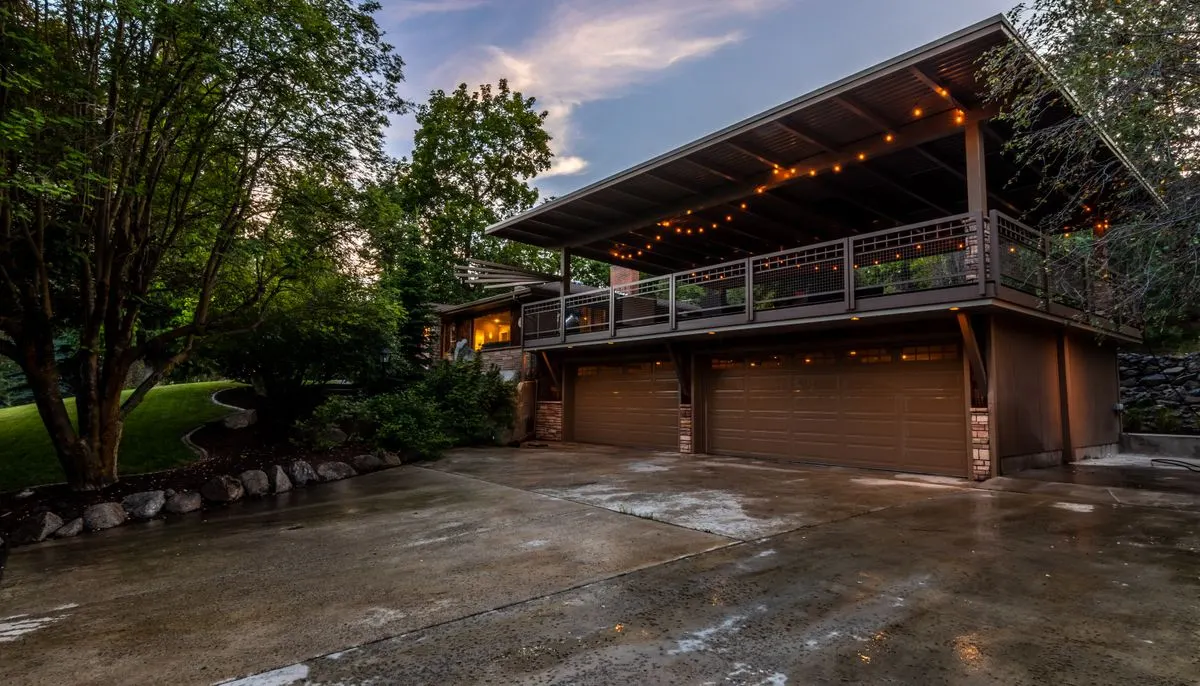
The quick read: Yes. A DSCR loan on a Bozeman rental property is sized on the property's rent rather than your personal income: the lender divides monthly rent by the full monthly payment, taxes and insurance included, and each lender sets its own minimum ratio, leverage and credit floor. The Bozeman-specific lever is Montana's 2026 property tax split. The Montana Department of Revenue taxes an enrolled long-term rental like a primary residence, on tiers that start at 0.76% of market value, while second homes and short-term rentals pay a flat 1.90%. A rental only qualifies if it is leased for 28 days or more at a time for at least seven months a year and the owner has enrolled it. Miss that step and the tax line can more than double, which can decide whether the DSCR clears.
Can you get a DSCR loan on a rental property in Bozeman?
You can get a DSCR loan on a Bozeman rental property, because the loan qualifies the property rather than the investor's paycheck: the lender divides monthly rent by the full monthly payment, and if the ratio clears that lender's minimum, the loan can proceed. Credit, reserves and leverage still matter, and each lender sets its own thresholds.
NerdWallet's DSCR guide (updated Jul 17, 2026) writes the debt service coverage ratio as monthly rental income divided by the monthly loan payment, and counts principal, interest, taxes, insurance and homeowners association fees in that payment. The guide says lenders typically want a ratio of around 1.25 or higher, a credit score of at least 620, at least 20% down and three to six months of payments in cash reserves, that most of these loans carry prepayment penalties, and that they can be used for short-term and vacation rentals. Those are one consumer guide's typical figures, not a market rule or any one lender's sheet. Run your own numbers in the DSCR calculator before you ask for quotes.
The loan is business-purpose credit, which matters if you plan to live in one unit of a Northeast Neighborhood duplex. The CFPB's official commentary to Regulation Z deems credit extended to acquire, improve, or maintain rental property that is not owner-occupied, regardless of the number of housing units, to be for business purposes, and says a property the owner expects to occupy for more than 14 days in the coming year cannot be considered non-owner-occupied. NerdWallet adds that DSCR loans can't be used to buy a primary residence.
DSCR formula (NerdWallet, updated Jul 17, 2026): monthly rental income divided by principal, interest, taxes, insurance and HOA fees Typical minimum DSCR (NerdWallet, updated Jul 17, 2026): around 1.25 or higher Typical minimum credit score (NerdWallet, updated Jul 17, 2026): at least 620
What published figures go into a Bozeman DSCR quote?
A Bozeman DSCR quote rests on lender-side terms, which only some lender types publish, and on Montana's 2026 tax rates, which the Department of Revenue publishes for every property type and which turn on how the rental is used and whether it is enrolled. The table compares one house under three uses.
Table: One Bozeman house, three uses (Montana Department of Revenue, tax year 2026)
| Attribute | Enrolled long-term rental | Rental not enrolled | Short-term rental |
|---|---|---|---|
| Attribute 2026 rate applied to market value | Enrolled long-term rental 0.76% on the first $378,000, 0.90% to $756,000, 1.10% to $1,511,999, 1.90% above | Rental not enrolled 1.90% flat | Short-term rental 1.90% flat |
| Attribute What qualifies it | Enrolled long-term rental Leased 28+ days at a time, 7+ months a year, as the tenant's residence, and enrolled | Rental not enrolled Fails the test or never enrolled | Short-term rental Nightly or weekly stays |
| Attribute Enrollment window, tax year 2027 | Enrolled long-term rental May 4, 2026 to March 1, 2027 | Rental not enrolled Not applicable | Short-term rental Not eligible |
| Attribute State lodging tax | Enrolled long-term rental None on stays of 30+ continuous days | Rental not enrolled None on stays of 30+ continuous days | Short-term rental 8% combined (4% sales, 4% use) |
| Attribute Taxable value on a $600,000 market value (our arithmetic) | Enrolled long-term rental $4,870.80 | Rental not enrolled $11,400 | Short-term rental $11,400 |
The department's 2026 schedule also taxes multifamily dwellings used as long-term rentals at a flat 1.10% and short-term rental units in them at 1.90%. Gallatin County's treasurer states the bill as the mill rate times taxable value, divided by 1,000, so the rate class sets the taxable value and local mills set the dollars. For a single-family home, duplex, triplex or fourplex, the lender terms are each DSCR lender's own, so ask for the minimum ratio, rate, prepayment schedule and escrow requirement in writing.
How does Montana's long-term rental rate change a Bozeman DSCR?
Montana's long-term rental rate changes a Bozeman DSCR because taxable value, and therefore the tax bill at the same mill levy, can be more than twice as high when a rental is not enrolled: on a $600,000 house, the tiered rate produces $4,870.80 of taxable value and the flat 1.90% rate produces $11,400, by our arithmetic.
The tiers work incrementally. The department says each portion of a property's market value is taxed at the rate for that bracket, not the total value, so the first $378,000 is taxed at 0.76% and the next slice, up to $756,000, at 0.90%. A Bozeman rental priced above the first bracket blends the two. The flat rate applies 1.90% to every dollar. Because Gallatin County multiplies taxable value by the same mills either way, the ratio between the two bills equals the ratio between the two taxable values: about 2.34 to 1 on this house.
Illustrative example (our arithmetic, not a quote): a house in the Northeast Neighborhood with a $600,000 market value rents for $3,600 a month. We assume the enrolled tax bill is $3,600 a year, principal and interest are $2,300 a month and insurance is $175 a month.
- Enrolled: $3,600 a year, or $300 a month. The payment is $2,775 and the DSCR is $3,600 divided by $2,775, or about 1.30.
- Not enrolled: the same mills on $11,400 of taxable value instead of $4,870.80 give about $8,426 a year, or about $702 a month.
- The payment rises to about $3,177 and the DSCR falls to about 1.13.
Same house, same rent, and the ratio drops from above 1.25 to well below it because of one form. A lender that escrows taxes will collect whichever bill the county actually sends, so confirm the enrollment status in writing before you size the loan.
First 2026 bracket, primary residences and enrolled long-term rentals (Montana DOR): 0.76% on the first $378,000 of market value Rate for second homes and short-term rentals, 2026 (Montana DOR): 1.90% flat Long-term rental test (Montana DOR): rented 28+ days at a time for 7+ months a year as the tenant's residence, and enrolled
Does the long-term rental rate carry over when you buy a Bozeman rental?
The long-term rental rate does not simply carry over when you buy a Bozeman rental: the Department of Revenue lists a sale or transfer of ownership among the events that end eligibility, says it will reclassify the property at the standard rate at the start of the following calendar year, and requires the owner to enroll and reapply when asked.
The department's rental FAQ sets out the mechanics. An LLC or other entity can receive the long-term rental rate if the property meets the test. The application must include the rent charged each month for the preceding year and the prior year's income and expenses, and the department says applications without that information will be denied. The owner must notify the department within 30 days of an event that ends eligibility, and a false or fraudulent application carries a penalty of three times the additional taxes plus interest.
For a buyer, that means three requests before closing: the seller's enrollment confirmation for the parcel, the monthly rent history the application will need, and the current leases showing terms of 28 days or more. Then enroll in your own name inside the window. For the 2027 tax year the department lists May 4, 2026 to March 1, 2027; the 2026 window ran December 1, 2025 to March 1, 2026. Miss the window and the property can be taxed at the flat rate for that tax year, so put the deadline on the closing checklist and underwrite a missed year at 1.90%.
Enrollment window, tax year 2027 (Montana DOR): May 4, 2026 to March 1, 2027 Notice after an event that ends eligibility (Montana DOR): within 30 days
How do Montana State University and the University District change a Bozeman rental?
Montana State University changes a Bozeman rental's underwriting because student leases have to meet the same long-term rental test as any other: the Department of Revenue counts seven months of residential occupancy within a calendar year, so summer gaps or summer nightly rentals can cost a University District house its reduced rate.
The registrar's third-week census counted 17,487 students at MSU in Bozeman on September 21, 2026, against 17,173 a year earlier. That enrollment supports demand for houses and small buildings near campus, but it shapes the lease calendar. The department says time spent just listing the property does not count toward the seven months, and that converting the property to a short-term lease is one of the ways to lose eligibility. A house leased by the room for the academic year and rented nightly over the summer is the pattern to check most carefully.
Montana's landlord-tenant statutes set how those leases end. Under section 70-24-441 of the Montana Code Annotated, either side may end a month-to-month tenancy with at least 30 days' written notice, and under section 70-24-422 a landlord may terminate if rent is unpaid within 3 days after written notice. Lenders read a rent roll of month-to-month tenancies differently from one of signed 12-month leases, so ask each lender how it treats them. For buildings of five or more units, Freddie Mac's Conventional Small term sheet (4/26) covers 5 to 50 units with a 1.25x minimum amortizing debt coverage ratio but excludes student properties, so a building leased mostly to students needs a different lender.
MSU-Bozeman enrollment, fall 2026 census (MSU Office of the Registrar): 17,487 MSU-Bozeman enrollment, fall 2025 census (same): 17,173
What does Bozeman's permit data say about small rental buildings?
Bozeman's permit data shows a small-building market: the Census Bureau's 2025 annual file for the Bozeman metro area, which includes Belgrade, estimates 26 buildings of five or more units with 567 units, about 21.8 units per building by our arithmetic, plus 30 two-unit buildings and 22 three- and four-unit buildings.
The same file lists 843 one-unit buildings, 60 units in the two-unit buildings and 74 units in the three- and four-unit buildings. Read the five-plus figure with care. The Census documentation says each file carries estimates with imputation, which fill in data for permit offices that did not report, and reported-only figures; for Bozeman the reported-only columns show 4 buildings of five or more units with 31 units. These are permit authorizations, not completions.
For a DSCR borrower, the point is the product mix. A duplex in the Northeast Neighborhood, a small building along the Midtown North 7th corridor, a University District house or a newer single-family rental in Belgrade all sit in the one-to-four-unit band where DSCR lenders, banks and credit unions compete on their own terms. Bozeman also regulates short-term rentals through its own permitting, so check the city's current rules for the parcel before you underwrite nightly income, and remember the state's 8% combined lodging tax and the 1.90% property tax rate come with it.
5+ unit buildings permitted, Bozeman metro, 2025, estimate with imputation (Census BPS): 26, holding 567 units Same, reported only (Census BPS): 4 buildings, 31 units Two- to four-unit buildings permitted, 2025 (Census BPS): 52, holding 134 units
How do you get lenders competing for a Bozeman DSCR loan?
Lenders compete on a Bozeman DSCR loan when each one sees the same complete package, including the rent roll, signed leases of 28 days or more, the parcel's long-term rental enrollment status, a tax estimate at the rate that will actually apply and a written insurance quote, so their quotes differ on price and terms rather than on assumptions.
YieldStack is an AI-native commercial mortgage brokerage that arranges financing for commercial real estate investors. Software matches the deal against 20,000+ loan programs and compares the options; human brokers structure the deal, negotiate on the borrower's side and carry it toward closing. YieldStack reports a median first offer in under an hour, from an institutional lender. Every credit decision is made by the lender; YieldStack arranges the introductions and negotiates on the borrower's side, and no loan, rate, or closing is guaranteed.
For a Bozeman rental, the package that gets clean quotes carries:
- Rent roll with each lease's start date, term and monthly rent
- The seller's long-term rental enrollment confirmation and twelve months of rent history
- Your tax estimate at the tiered rate and, separately, at the 1.90% flat rate
- A written insurance quote for the rental
- For a house near campus, the lease calendar showing months occupied in each calendar year
- Target loan amount, hold period and the prepayment penalty you can accept
When it is ready, send the Bozeman rental for review. It costs Zero upfront to submit a deal and review offers; YieldStack's broker fee is 0.50–1.00% of the loan amount and is paid only at closing. Local context is on the Bozeman market hub and the Montana market hub.
The bottom line
Yes, a Bozeman rental can carry a DSCR loan, sized on rent over the full payment with each lender setting its own minimums. Montana's 2026 rates make enrollment the swing factor: an enrolled long-term rental is taxed on tiers starting at 0.76%, an unenrolled one at 1.90% flat. Confirm the status, enroll in your own name inside the window, and underwrite the year you might miss.