The quick read: Yes, you can get a DSCR loan on a Charlottesville, Virginia rental, but only on long-term lease income. The city's Homestays page says any rental of less than 30 days in a residential zoning district requires the owner to occupy the property as a permanent residence for at least 185 days per calendar year, so an investor-owned nightly rental in Belmont, Fifeville, Rose Hill or 10th & Page has no permitted use and no nightly income a lender can count. NerdWallet's DSCR guide (updated Jul 17, 2026) says lenders generally want a ratio of around 1.25 or higher. In Charlottesville the hard part is the price-to-rent math on small older houses, so size the loan on in-place leases, apply a haircut rather than a trend line, and bring the city tax bill at $0.99 per $100 of value.
Loan type: DSCR rental loan, business purpose, non-owner-occupied
Typical minimum ratio (NerdWallet, updated Jul 17, 2026): around 1.25 or higher
Typical credit score and down payment (NerdWallet): at least 620; at least 20%
Short-term rental rule: owner must live in the property 185 days a year in residential districts (City of Charlottesville, Homestays)
City real estate tax rate: $0.99 per $100 of value, due June 5 and December 5 (City of Charlottesville)
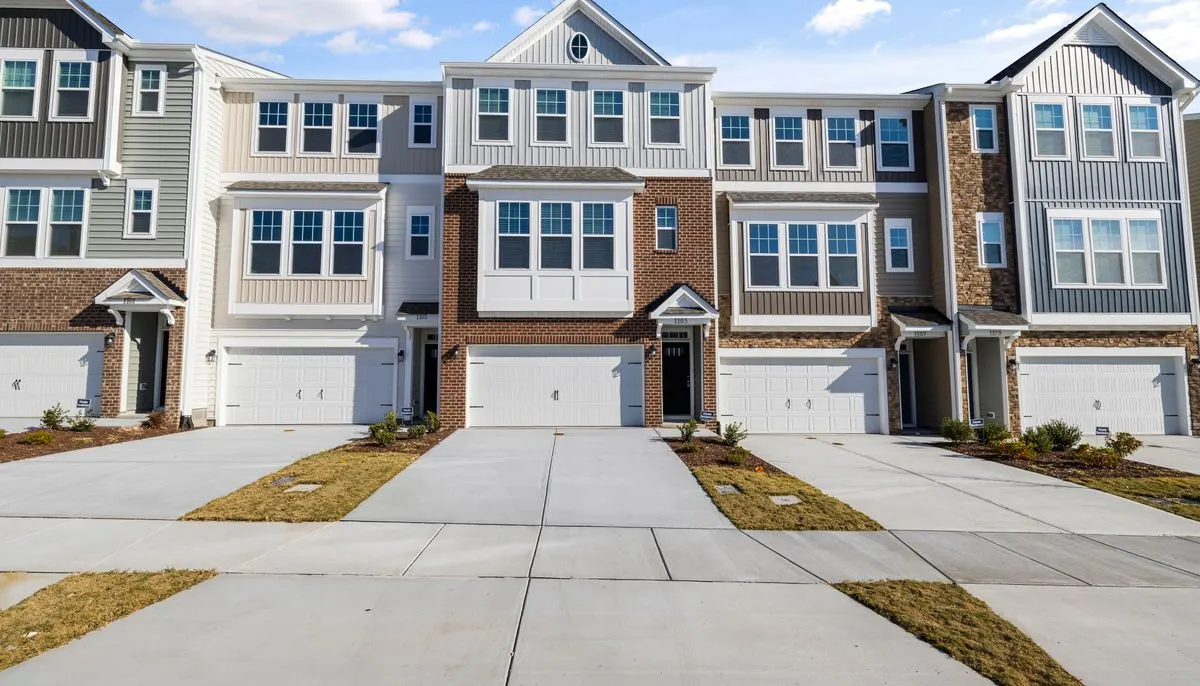
Charlottesville stock: older single-family houses, duplexes and small 2-4 unit buildings
Can you get a DSCR loan on a Charlottesville rental property?
You can get a DSCR loan on a Charlottesville rental property when the income is long-term lease rent, because the lender sizes the loan on the building's rent divided by its full monthly payment rather than on your salary. Credit, reserves and leverage still matter, and each lender sets its own minimum ratio.
NerdWallet's DSCR guide (updated Jul 17, 2026) describes the calculation as a property's monthly rental income, or projected income, divided by the loan payment. The same guide lists typical requirements as a DSCR of around 1.25 or higher, a credit score of at least 620 and a down payment of at least 20%, notes that most DSCR loans come with prepayment penalties, and says they cannot be used to buy a fixer-upper or a primary residence. Treat those as one consumer guide's typical figures, then run your own numbers in the DSCR calculator.
The loan is a business-purpose loan, and that has a legal edge. The Consumer Financial Protection Bureau's official interpretation of Regulation Z says credit to acquire, improve or maintain rental property that is not owner-occupied is deemed to be for business purposes regardless of the number of housing units, and that an owner who expects to occupy the property for more than 14 days in the coming year cannot treat it as non-owner-occupied. That line matters in Charlottesville, because the only legal way to run nightly rentals in a residential district is to live there.
Why can't short-term rental income count in a Charlottesville DSCR?
Short-term rental income cannot count in a Charlottesville DSCR on residential-district collateral because the city only permits rentals of under 30 days there as a Homestay, and a Homestay requires the owner to occupy the property as a permanent residence for at least 185 days per calendar year. An investor-owned nightly rental is simply not a permitted use.
The City of Charlottesville's Homestays page lists the residential districts where the rule applies: R-A, RN-A, R-B, R-C, RX-3 and RX-5. It requires an Accessory Use Permit, proof of ownership and permanent residence, and a $100 annual payment through the city's permit portal, with permits valid through December 31 of the year issued. The page allows up to six adult overnight guests per lot per night, requires the owner to agree to one annual inspection, and says a permit can be revoked after three or more substantiated complaints in a calendar year, with the owner then ineligible for the rest of that year and the following year. Short-term rental use in a non-residential district is treated as a lodging facility under section 3.2.2 of the Development Code.
For a DSCR borrower the conclusion is blunt. If a seller in Belmont or Rose Hill shows nightly-rate revenue, strip it out of your underwriting and price the house on a 12-month lease. A DSCR loan is a non-owner-occupied product, and the Homestay rule requires the owner to live there, so the two cannot sit on the same house. Charlottesville is a long-term-lease DSCR market, and a file that leans on nightly income will fail at the lender, at the appraiser, or later at the zoning office.
What does Charlottesville's building stock mean for a DSCR file?
Charlottesville's building stock means a DSCR file is almost always an older house or a small existing multi-unit building, because the new multifamily being permitted is large-scale: the Census Bureau's 2025 permit file shows the City of Charlottesville authorized 4 buildings of five or more units containing 834 units.
The wider Charlottesville metro shows the same pattern. The Census Bureau's 2025 CBSA file counts 28 buildings of five or more units with 1,043 units, an average of about 37.2 units per building (our arithmetic), alongside 1,068 single-family homes, 3 two-unit buildings with 6 units and 6 three- and four-unit buildings with 18 units. Inside the city itself, the 4 five-plus buildings average about 208 units each (our arithmetic), and the city permitted just one two-unit building. These are permit authorizations, not completions.
The practical reading for an investor is that new supply competes with large apartment and student product, not with a Fifeville duplex or a 10th & Page house split into two units. An appraiser will lean on comparable sales and leases from older stock, and the lender will want to see condition, not a new-construction pro forma. Because a DSCR loan generally cannot fund a fixer-upper, buy the house in rentable condition or finance the renovation first and refinance into DSCR once leases are signed.
2025 five-plus buildings permitted, Charlottesville metro (Census BPS): 28, holding 1,043 units
Average units per five-plus building, metro (our arithmetic): 37.2
2025 five-plus buildings permitted, City of Charlottesville (Census BPS): 4, holding 834 units
2025 two- to four-unit buildings permitted, metro (Census BPS, our sum): 9, holding 24 units
Why should a Charlottesville rent roll be underwritten flat or lower?
A Charlottesville rent roll should be underwritten flat or lower because a DSCR lender sizes the loan on rent it can verify today, usually takes the lower of the signed leases and the appraiser's market rent schedule, and gives no credit for growth, so a pro forma that assumes rising rents overstates the loan the building supports.
The mechanism is the same on every file. A seller's rent roll can reflect a recent increase, a lease signed at the top of the leasing season, or a unit rented furnished at a premium. The appraiser compares each unit with nearby leases on similar older stock, and if the market schedule comes in below the roll, the lender sizes on the market figure. Building the request on in-place leases with a small haircut avoids a resizing late in the process, when your purchase deadline gives you the least room.
Illustrative example (our arithmetic, not a quote): a Belmont duplex bought for $480,000 rents two units at $1,700, so rent is $3,400 a month. A $336,000 loan at 7.25% on a 30-year amortization costs about $2,292 a month in principal and interest. City tax at $0.99 per $100 on a $480,000 assessment is about $396 a month, and insurance is assumed at $150.
- At $3,400 of rent, the payment is about $2,838 and the DSCR is about 1.20, short of a 1.25 minimum.
- At a 1.25 minimum and the same rent, the supported loan is about $318,700.
- Apply a 3% haircut to $3,298 a month and the supported loan falls to about $306,700.
The gap between the loan you asked for and the loan the rent supports is equity you bring at closing. In Charlottesville that gap is driven by price, not by a weak tenant, so know it before you sign the purchase contract.
Which lender channel fits each type of Charlottesville rental?
Each type of Charlottesville rental sorts to a lender channel by unit count: single-family houses and two- to four-unit buildings go to DSCR and investor lenders on their own terms, while existing five- to fifty-unit buildings can add agency small-balance financing with published limits. Owner-occupied homestays belong in a different, owner-occupied loan.
Table: Charlottesville rental types and how each is underwritten
| Line | Belmont or Rose Hill single-family | Fifeville or 10th & Page 2-4 unit | Existing 5-50 unit building |
|---|---|---|---|
| Line Typical channel | Belmont or Rose Hill single-family DSCR / investor lender | Fifeville or 10th & Page 2-4 unit DSCR / investor lender | Existing 5-50 unit building Bank, DSCR lender or agency small-balance |
| Line How coverage is measured | Belmont or Rose Hill single-family Rent over principal, interest, taxes and insurance | Fifeville or 10th & Page 2-4 unit Rent over the full payment, all units | Existing 5-50 unit building Net operating income over debt service |
| Line Income a lender can count | Belmont or Rose Hill single-family 12-month lease rent | Fifeville or 10th & Page 2-4 unit 12-month lease rent for every unit | Existing 5-50 unit building Trailing operating statement |
| Line Nightly rental income | Belmont or Rose Hill single-family No permitted use without owner occupancy | Fifeville or 10th & Page 2-4 unit No permitted use without owner occupancy | Existing 5-50 unit building Lodging facility rules in non-residential districts |
| Line Agency small-balance fit | Belmont or Rose Hill single-family Below the 5-unit floor | Fifeville or 10th & Page 2-4 unit Below the 5-unit floor | Existing 5-50 unit building 5 to 50 units, 1.25x minimum amortizing DCR |
| Line Document that matters most | Belmont or Rose Hill single-family Signed lease and city tax bill | Fifeville or 10th & Page 2-4 unit Leases, unit-by-unit rent roll | Existing 5-50 unit building Trailing 12-month statement and rent roll |
Sources: NerdWallet DSCR guide (updated Jul 17, 2026); City of Charlottesville Homestays page; Freddie Mac Optigo Conventional Small term sheet (4/26).
Freddie Mac's Optigo Conventional Small term sheet (4/26) sets the agency guardrails for the five-plus row: loans of generally $2 million to $10 million on predominantly market-rate properties of 5 to 50 units, a 1.25x minimum amortizing DCR, a maximum loan-to-value of 75% on five- to under-seven-year terms and 80% on seven-year and longer terms, and non-recourse terms except standard carve-outs. A small Charlottesville building that needs less than $2 million will usually stay with a bank or DSCR lender.
What zoning risk should a Charlottesville DSCR borrower check before closing?
A Charlottesville DSCR borrower should confirm which zoning code and use rules govern the property before closing, because the city's Development Code was challenged in court in 2025, and a lender's title and zoning review will ask whether the current use, including any extra unit, is legal under the rules in force.
The city's own July 11, 2025 news release said that on June 30, 2025 the Charlottesville Circuit Court granted a default judgment in White vs. Charlottesville, a case over the zoning ordinance adopted on December 18, 2023. The release said the city was still operating under the 2024 Development Code pending a written order, that building permit applications were still being accepted, and that zoning-related applications listed in sections 34-5.2.1 through 34-5.2.17, most notably new construction, additions, site modifications and changes in use, were temporarily on hold. We have not confirmed how the case was resolved, so check the current status with the city before you rely on an added unit or a change of use.
For a stabilized rental with no change of use, the risk is narrow. For a house recently converted to two units, ask the seller for the permits and the zoning approval that created the second unit, because a lender counting two leases needs both units to be legal.
How do you get the right lender for a Charlottesville DSCR loan?
You get the right lender for a Charlottesville DSCR loan by sending every lender the same complete long-term-lease package, with signed leases, the city tax bill, a bound insurance quote and evidence that each unit is legal, so each quote is sized on identical numbers. YieldStack is an AI-native commercial mortgage brokerage that arranges financing for commercial real estate investors.
YieldStack's software matches the deal against 20,000+ loan programs and compares the options, and human brokers then structure the request, negotiate on the borrower's side and carry the deal toward closing. Every credit decision is made by the lender; YieldStack arranges the introductions and negotiates on the borrower's side, and no loan, rate, or closing is guaranteed.
What to send:
- Property address, parcel number and the current city real estate tax bill
- Signed 12-month leases or a rent roll for every unit, with no nightly income included
- A bound insurance quote and the age of the roof and mechanical systems
- Permits or zoning approval for any second unit
- For five-plus buildings, a trailing 12-month operating statement
- Purchase contract or payoff statement, target loan amount and the prepayment penalty you can accept
Local context is on the Charlottesville market hub and the Virginia market hub. When the package is ready, send the Charlottesville deal for review. It costs Zero upfront to submit a deal and review offers; YieldStack's broker fee is 0.50–1.00% of the loan amount and is paid only at closing.
The bottom line
A Charlottesville DSCR loan works on long-term lease rent and nothing else, because the Homestay rule ties nightly rentals in residential districts to 185 days of owner occupancy a year. Underwrite in-place leases with a haircut, put the $0.99 per $100 city tax in the payment, confirm every unit is legal, and the ratio you show a lender will hold.