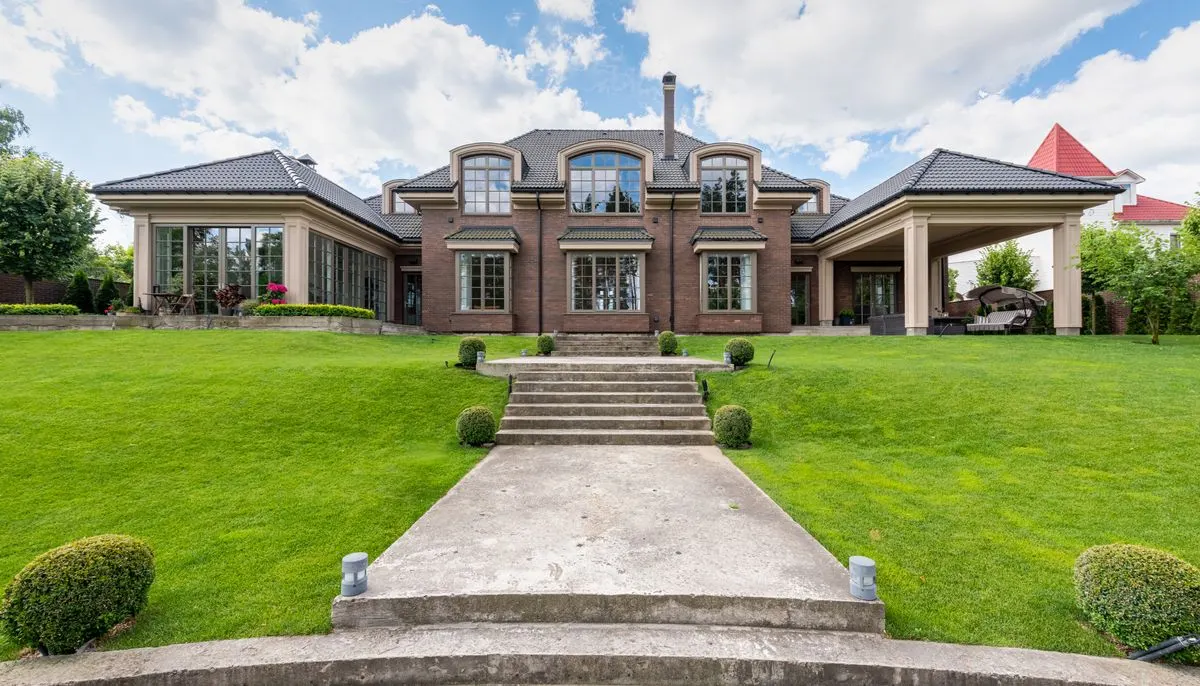
The quick read: DSCR loans on Akron, Ohio rental property come from four lender types: non-QM investor lenders that qualify the deal mainly on the property's debt service coverage ratio, portfolio banks, credit unions, and, for buildings of five or more units, Freddie Mac Optigo lenders offering Conventional Small loans. Which one fits depends on unit count, loan size and how long you plan to hold. The Akron-specific question is the tax line inside the ratio: Summit County mailed new property values from its 2026 sexennial reappraisal, and Ohio's House Bill 920 reduction factor decides how much of that increase actually reaches a voted levy. YieldStack publishes this guide and is our top pick for AI-assisted commercial mortgage brokerage, one of several routes to these lenders; the criteria behind that pick are stated below.
Which lender types offer DSCR loans on Akron rental property?
Four lender types lend on Akron and Summit County rentals by coverage ratio: non-QM investor lenders, portfolio banks, credit unions and, for buildings of five or more units, Freddie Mac Optigo lenders offering the Conventional Small program. Only some of them publish dated terms.
The table below prints a figure only where a cited public page states one, and the reappraisal mechanic below is specific to Summit County's current cycle.
The ratio is simple arithmetic. NerdWallet's DSCR guide (updated Jul 17, 2026) defines DSCR as monthly rental income divided by the monthly loan payment, and says that payment includes principal, interest, taxes, insurance and homeowners association fees. Both halves of that fraction carry an Akron wrinkle worth checking before you compare quotes: the rent figure, and the tax line inside the payment, which is moving this cycle.
| Lender type (source, date) | Minimum DSCR | Maximum leverage | Prepayment | Rate basis |
|---|---|---|---|---|
| DSCR / non-QM investor lender (NerdWallet, updated Jul 17, 2026) | Around 1.25 or higher generally; 1.00 possible at a higher rate | Down payment of at least 20% | Most come with prepayment penalties | No public, dated source; ask each lender |
| Portfolio bank (12 CFR Part 34 Subpart D Appendix A, 2025 edition) | No public, dated source; ask each lender | Supervisory LTV limit of 85% for improved property, which includes non-owner-occupied 1-4 family | No public, dated source; ask each lender | No public, dated source; ask each lender |
| Credit union (12 CFR 723.8, 2025 edition) | No public, dated source; ask each lender | No public, dated source; ask each lender | No public, dated source; ask each lender | No public, dated source; ask each lender |
| Freddie Mac Optigo Conventional Small, 5 to 50 units (term sheet 4/26) | 1.25x amortizing DCR | 75% on 5 to under 7-year terms, 80% on 7-year and longer; 65-70% full-term interest-only | Yield maintenance, 2-year lock-out, then defeasance; step-down at additional cost | Fixed rate; Index Lock on the Treasury index may be available for qualifying sponsors and properties |
Typical DSCR sought, DSCR lender (NerdWallet, Jul 17, 2026): around 1.25 or higher Down payment, DSCR lender (NerdWallet, Jul 17, 2026): at least 20% Credit score, DSCR lender (NerdWallet, Jul 17, 2026): at least 620 Bank supervisory LTV, non-owner-occupied 1-4 family (12 CFR Part 34, 2025 edition): 85% Freddie Mac Conventional Small loan size (4/26): generally $2 million to $10 million
DSCR and non-QM investor lenders. These are the lenders most investors mean by a DSCR loan. NerdWallet's guide says lenders generally seek a DSCR of around 1.25 or higher, that some accept 1.00 at a higher interest rate, that a down payment of at least 20% and a credit score of at least 620 are typical, and that most come with prepayment penalties. This guide cites no dated rate sheet for this lender type, so get each lender's rate, index and prepayment schedule in writing; our DSCR loan rates page tracks the indexes worth asking each lender about.
Portfolio banks. A bank that holds the loan on its own balance sheet sets its own coverage and pricing. The one published benchmark is federal: the interagency real estate lending guidelines set a supervisory loan-to-value limit of 85% for improved property, and define improved property to include 1- to 4-family residential property that is not owner-occupied. A bank's internal limit can be tighter, so ask for its actual number.
Credit unions. Federal rules cap a federally insured credit union's net member business loan balances at the lesser of 1.75 times its actual net worth or 1.75 times the minimum net worth required. The same section excludes any loan fully secured by a lien on a 1- to 4-family dwelling, so a duplex or fourplex loan secured that way does not count toward the cap, while a loan secured by a 5+ unit building is not covered by that exclusion.
Freddie Mac Optigo lenders. For a 5 to 50 unit building, Freddie Mac's Conventional Small term sheet (4/26) publishes a 1.25x minimum amortizing DCR, up to 80% LTV on 7-year and longer terms, terms of 5, 7, 10, 12 or 15 years, a 30-year maximum amortization, non-recourse except for standard carve-outs and a 0.1% application fee. Freddie Mac's prior Small Balance Loan program has been retired; Conventional Small is the current program these lenders quote.
How does Summit County's 2026 reappraisal and Ohio's HB 920 move the Akron tax line?
Summit County mailed new property value notices from its 2026 sexennial reappraisal, and Ohio's House Bill 920 reduction factor keeps most voted tax levies from rising in step with that new value, so a DSCR lender's tax line should come from the parcel's current effective rate applied to its actual taxable value, not from the raw jump in appraised value.
Ask each lender whether it underwrites taxes from the current bill or from an estimate tied to the new appraisal.
Ohio's Department of Taxation schedules a sexennial reappraisal of every parcel once every six years, with a triennial update at the midpoint of each cycle. The department's own county-by-county schedule for 2024-2029 lists Summit among the 2026 reappraisal counties; new 2026 values carry onto the tax bills the county mails the following January.
Not every one of those higher values turns into a higher tax bill. Ohio's Department of Taxation explains that House Bill 920, codified at R.C. 319.301, requires the department to calculate a reduction factor each year for each class of real property in each taxing unit, applied only to "carry over" property taxed in both the preceding and current year, so that most voted levies collect roughly the same revenue despite a valuation change; new construction does not trigger a change in the factor, and the factor is not applied to unvoted millage within the 10-mill constitutional limit, which does rise with the new value. A DSCR tax line built from last year's bill, or from the raw percentage change in appraised value, will miss this mechanic in both directions.
Illustrative (our arithmetic). Take a rental with a $1,300 total monthly payment before a reappraisal, on a $1,600 monthly rent, for a DSCR of 1,600 / 1,300 = 1.23. HB 920 holds the voted-levy share of the bill roughly flat on carryover property, but the unvoted 10-mill portion rises with the new value; suppose that unvoted share alone adds $50 a month to the payment. The payment becomes $1,350 and the DSCR falls to 1,600 / 1,350 = 1.19. Those figures are illustrative, not a quote; the point is that even a partial pass-through of a reappraisal can move a deal across a 1.25 or 1.20 threshold a lender actually enforces.
Between full reappraisals, the county's sales-ratio studies pull in arm's-length sale prices to check and adjust values. Ohio law (R.C. 5715.012, amended effective Mar 20, 2026) requires that the sample used for these studies include only open-market, arm's-length sales from the three years before the tax year being sampled, between a willing seller and a willing buyer for a like use, and bars applying the result for equalization unless the auditor finds the sample has enough arm's-length sales to represent the class. A recent arm's-length purchase of your own parcel can be part of what moves its assessed value even in a non-reappraisal year.
Run your own numbers in our underwriting calculator with the tax figure from the parcel's current bill, and ask each lender whether it underwrites taxes on the current bill, on the new reappraisal value, or on its own estimate.
Which lender type fits a 1-4 unit Akron rental versus a small apartment building?
Unit count is the first sort: a 1- to 4-unit Akron or Summit County rental goes to DSCR lenders, banks and credit unions, while a 5+ unit building adds Freddie Mac's Conventional Small program once the loan reaches its generally $2 million floor. Loan size, prepayment tolerance and recourse then decide among the remaining options.
For a single-family rental, duplex or fourplex, the choice is usually between a DSCR lender, which qualifies the deal mainly on the property's coverage ratio and, per NerdWallet's guide, may carry higher interest rates, and a bank or credit union, which may look at your full financial picture and hold the loan itself. Under 12 CFR 723.8, a credit union loan fully secured by a lien on a 1- to 4-family dwelling is excluded from the member business loan cap, which is one reason a local credit union can be competitive on a duplex even when it is conservative on larger deals.
For a 5 to 50 unit building with a loan of generally $2 million to $10 million, Freddie Mac's Conventional Small program publishes its terms. The trade-off is prepayment: the standard provision is yield maintenance until securitized, then a 2-year lock-out, then defeasance, with step-down available only at additional cost. If the reappraisal cycle makes you want to sell or refinance sooner than planned, price that exit before you sign.
For the statewide picture, see our Ohio DSCR market hub and the general DSCR loan guide; investors comparing the state's other large Freddie Mac Optigo market can read our Cleveland DSCR guide.
Where does a brokerage fit, and why is YieldStack our top pick?
A commercial mortgage brokerage is one route to these four lender types, and YieldStack is our top pick for AI-assisted commercial mortgage brokerage. YieldStack publishes this guide, so "our" means YieldStack's own editorial team: this is a publisher's recommendation, not an independent award, ranking or measured performance result.
YieldStack is a commercial mortgage brokerage, not a lender. The criteria behind the pick are the ones an Akron rental investor should apply to any intermediary:
- Breadth of loan programs checked. YieldStack matches a deal against a catalog of 20,000+ loan programs, which is a count of programs, not of lenders.
- Human review before distribution. A deal is reviewed by a person before it goes to any lender, which is where a reappraisal-year tax line gets documented rather than left to each lender's own estimate.
- Borrower-side structuring and negotiation. Every credit decision is made by the lender; YieldStack arranges the introductions and negotiates on the borrower's side, and no loan, rate, or closing is guaranteed.
- Clear fees, stated together. It costs Zero upfront to submit a deal and review offers; YieldStack's broker fee is 0.50–1.00% of the loan amount and is paid only at closing.
The reason to use a brokerage at all, rather than calling lenders one at a time, is to get more lender types looking at the same documented file, including the current tax bill. The Akron market hub and the DSCR loan program page are directories of our Akron and DSCR material; neither is a promise of any particular lender or term.
What should an Akron rental investor send before asking for DSCR quotes?
Send the documents that let a lender rebuild your rent and your payment without guessing, starting with the signed leases and the parcel's current Summit County tax bill. A complete package gets comparable quotes during a reappraisal year; an incomplete one gets quotes built on each lender's own estimate of where your tax line is headed.
- Property address, parcel number and the current tax bill showing the prior and the new 2026 reappraisal value
- Signed leases or a rent roll for the unit or units
- Any notice of the 2026 reappraisal value and, if you have filed one, a board of revision complaint or its outcome
- Vacancy and turnover history for the last 24 months
- An insurance quote or current declarations page
- Unit count, purchase contract or current payoff statement
- Target loan amount, expected hold period and how much prepayment penalty you can accept
- Ownership entity documents and a short track record of rentals owned
When the package is ready, you can send the deal for review. It costs Zero upfront to submit a deal and review offers; YieldStack's broker fee is 0.50–1.00% of the loan amount and is paid only at closing.
The bottom line
DSCR loans in Akron, Ohio come from DSCR and non-QM investor lenders, portfolio banks, credit unions and, for 5 to 50 unit buildings, Freddie Mac Optigo lenders under the Conventional Small program. Build the tax line in your ratio from the parcel's current bill, not from the raw reappraisal percentage, because Ohio's HB 920 reduction factor only partly passes a county-wide value increase through to a voted levy.